Our Seville series covers all the popular sights – the cathedral, the palaces, the museums – and also helps you ‘meet’ those who made their mark here, whether real (Christopher Columbus, Laurie Lee) or fictional (Carmen, Don Juan) And we cover all the top Seville themes too, from flamenco and bull-fighting to tapas and Moorish architecture.
The 13 episodes in our City Break Seville series bring you all the background history and culture you need to fully understand this stunning city. In short, here is all the research you’d do yourself if only you had the time.
Each episode centres around a podcast, available here or on all the usual providers. As a minimum, you’ll also find an introductory summary plus useful links and ideas for further reading. Eventually, there’ll be full blogpost with lot more information and pictures.
SEVILLE : HISTORY & CULTURE
EPISODE 1: Introduction to Seville
Bienvenidos! Welcome to Episode 01 of City Breaks Seville, which will give you an overview of the city, historically, geographically and culturally and an idea of the material to be covered in the remaining 12 episodes. We hope you will enjoy this series, and maybe feel inspired to plan a visit to lovely Seville.

EPISODE 2: The Alcazar
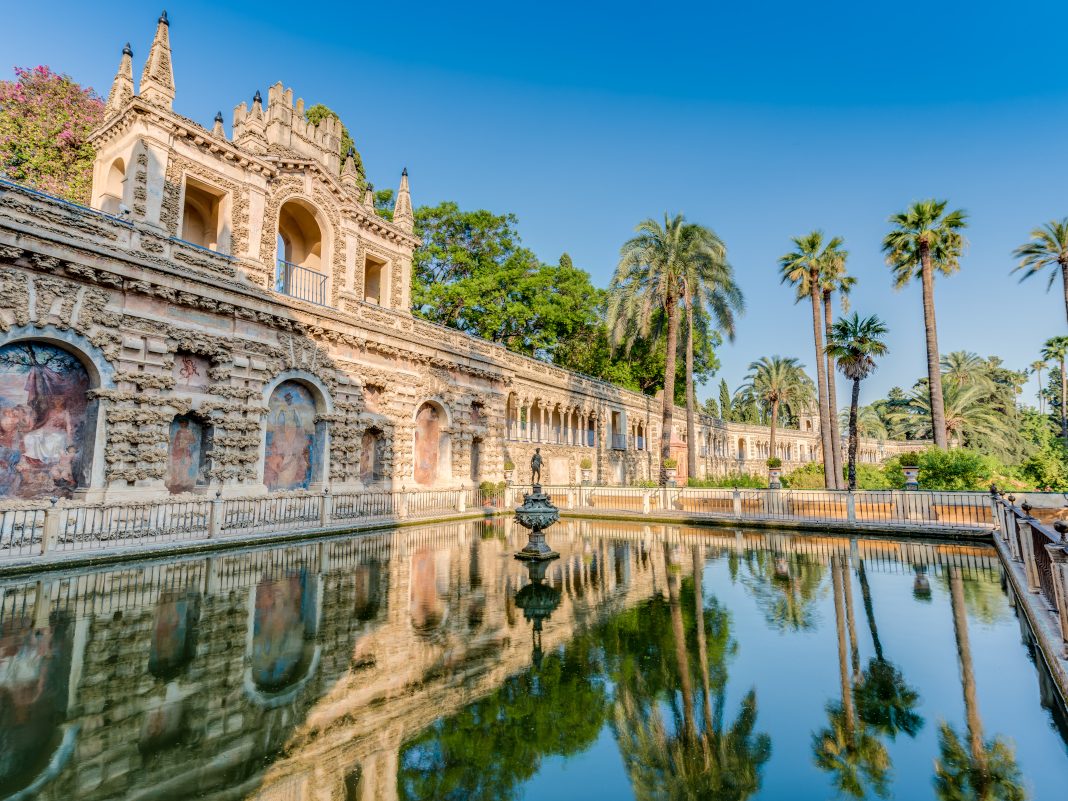
The Alcazar is the heart of moorish Seville, perhaps the most beautiful building in the city, although there’s strong competition. It captivated later Christian kings like Ferdinand of Castille who moved in and determined to ‘die under its roof’. Meet other inhabitants like Pedro the Cruel, who so admired Islamic designs that he borrowed builders from his friend the Emir of Granada and Ferdinand and Isabella who set up their ‘Casa de la Contratacion’ in the Alcazar and ran their New World Empire from there. Find out what to see and what travel-writers from past ages had to say about this lovely building and its beautiful gardens.
EPISODE 3: The Cathedral
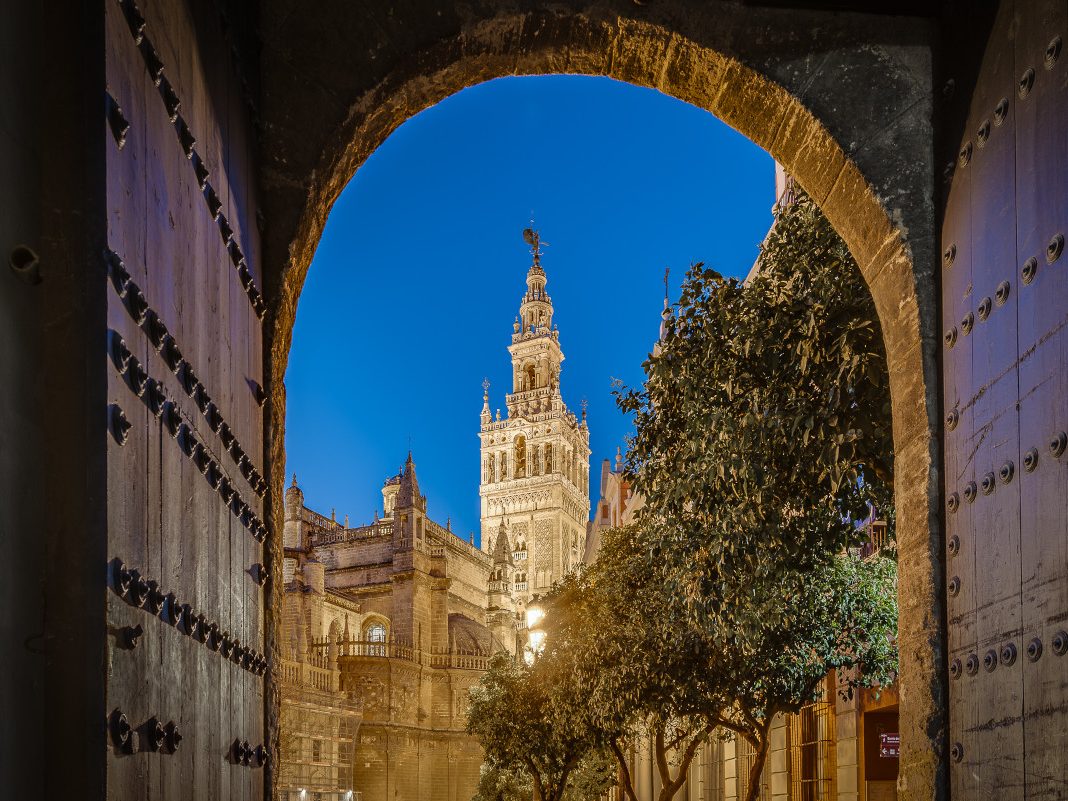
Seville’s cathedral was built on the site of the mosque when the Christians re-conquered the city, so parts of it – the Giralda, the Patio de los Naranjos and the arched gateway – date from the Islamic era. After choosing just a tiny proportion of the cathedral’s treasures to highlight, we head off to the nearby area of Santa Cruz, home to Seville’s Jewish community before they fled Spain during the Inquisition. Today it’s a charming labyrinth of tiny cobbled streets and flower-filled patios, enticingly viewed through wrought iron gates.

EPISODE 4: The Golden Age
1492, the year Columbus sailed the ocean blue, marked the beginning of the golden age for Seville, which had the monopoly on trade between Spain and the New World and became Europe’s 16th century boomtown. The episode re-tells the story, then highlights 3 places to visit in today’s Seville which have much to tell you about the city’s role in the discovery of new lands and about the sailors who first sailed right around the globe: the Torre del Oro (Golden Tower), Admiral’s Quarters and the Archivo de Indias, former trade centre and now a museum and archive centre.
EPISODE 5: Semana Santa
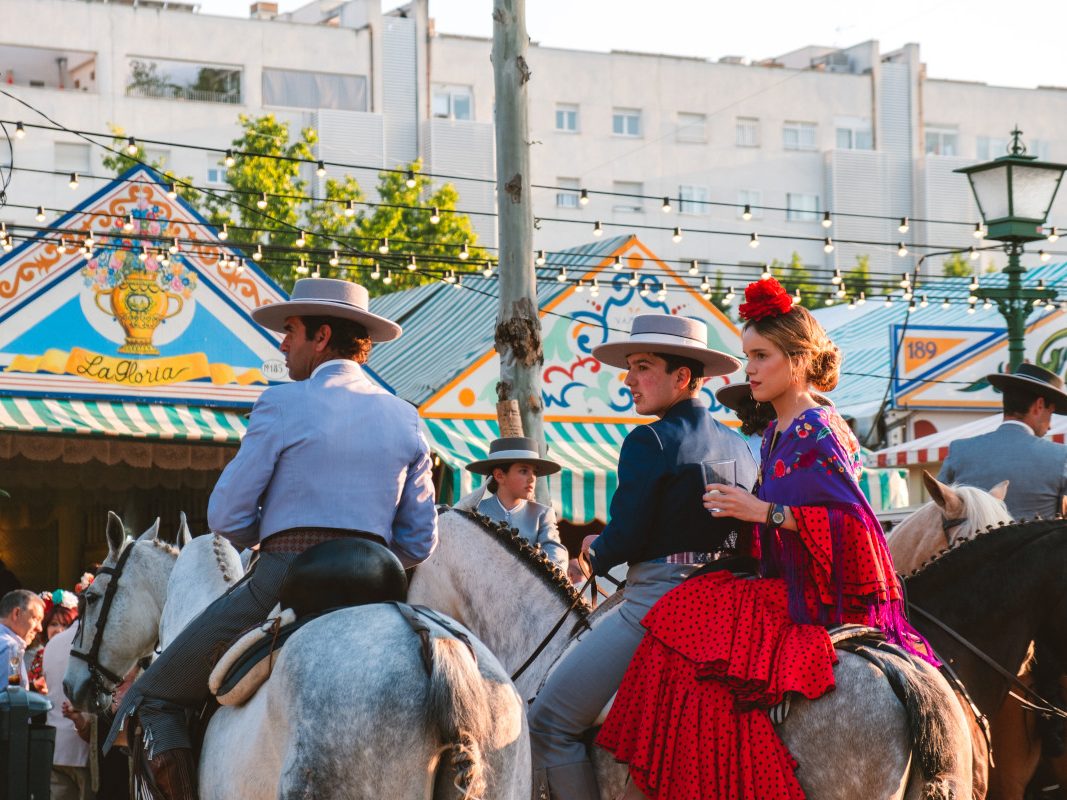
For two weeks every spring, it seems as if the world has come to Seville and this episode explains why. Semana Santa, or Holy Week, sees sombre processions by 50 different ‘brotherhoods’ to re-enact the events from the last week of Christ’s life, the culmination of months of preparation and weeks of rehearsals. In late April, it’s party-time at Seville’s six-day long ‘Feria de Abril’, thought to be the liveliest in Spain. After afternoons of carriage-riding or perhaps a paseo on horseback, the long nights are for revelling Seville style which means flamenco, tapas, funfair rides and dancing till dawn.
EPISODE 6: Parks & Palaces
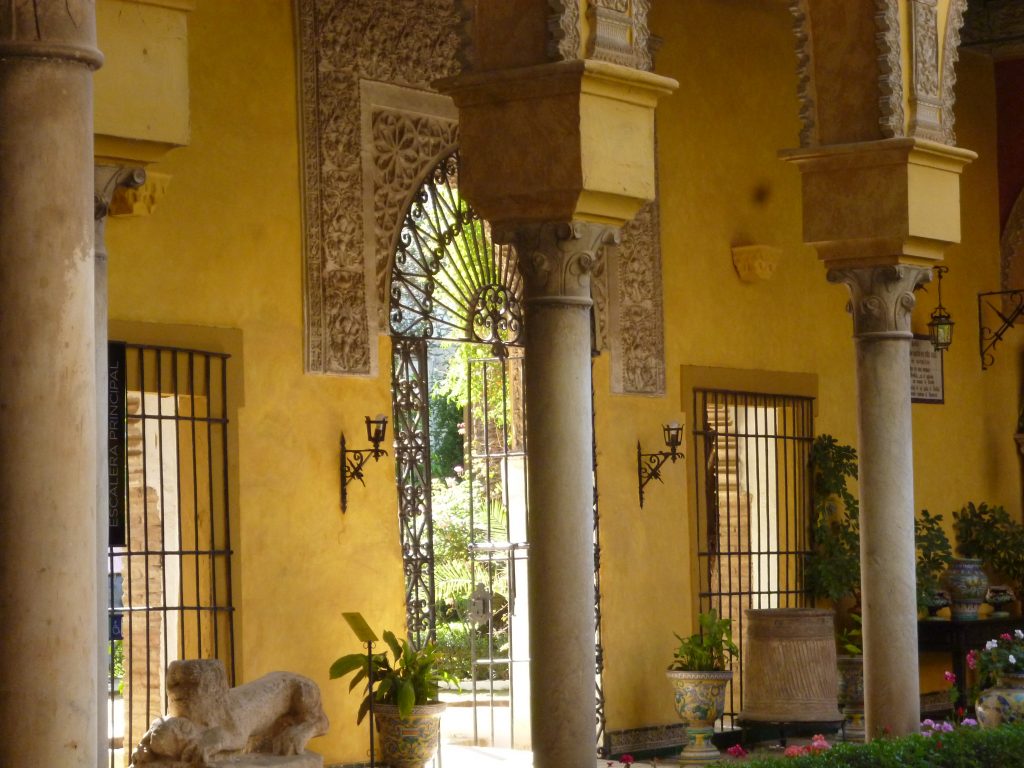
An episode about just wandering round Seville for the pleasure of it! Hear about the art-deco charm of the Maria Luisa Park, with its delightful tree-lined avenues, fountains and statues and the splendid Plaza de Espana, built to showcase Spanish culture in 1929 and today a place to enjoy ice creams and boating. Then discover three of Seville’s palaces, the Casa de Pilates, the Palacio de las Duenas and the Palacio de Lebrija, where shady courtyards, exquisite archways and a feast of other treasures await. This episode offers a little history, a spot of travel-writing and a lot of relaxation.

EPISODE 7: Triana
We cross the river Guadalquivir to the ‘other’ side, the former working class district of Triana, which has always been a little set apart from the rest of the the city. It wasn’t until the mid nineteenth century that a stable bridge was built to link Triana and Seville! Hear about its Moorish and gypsy roots, its links to Christopher Columbus and its critical role in Seville’s world-famous ceramics industry. Find out about its ‘endearingly scruffy’ atmosphere and how it is the place where two of Andalucia’s most important cultural traditions are thought to have begun: flamenco and bull-fighting.
EPISODE 8: Bullfighting
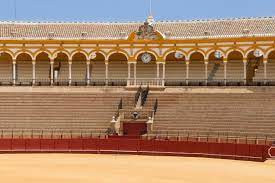
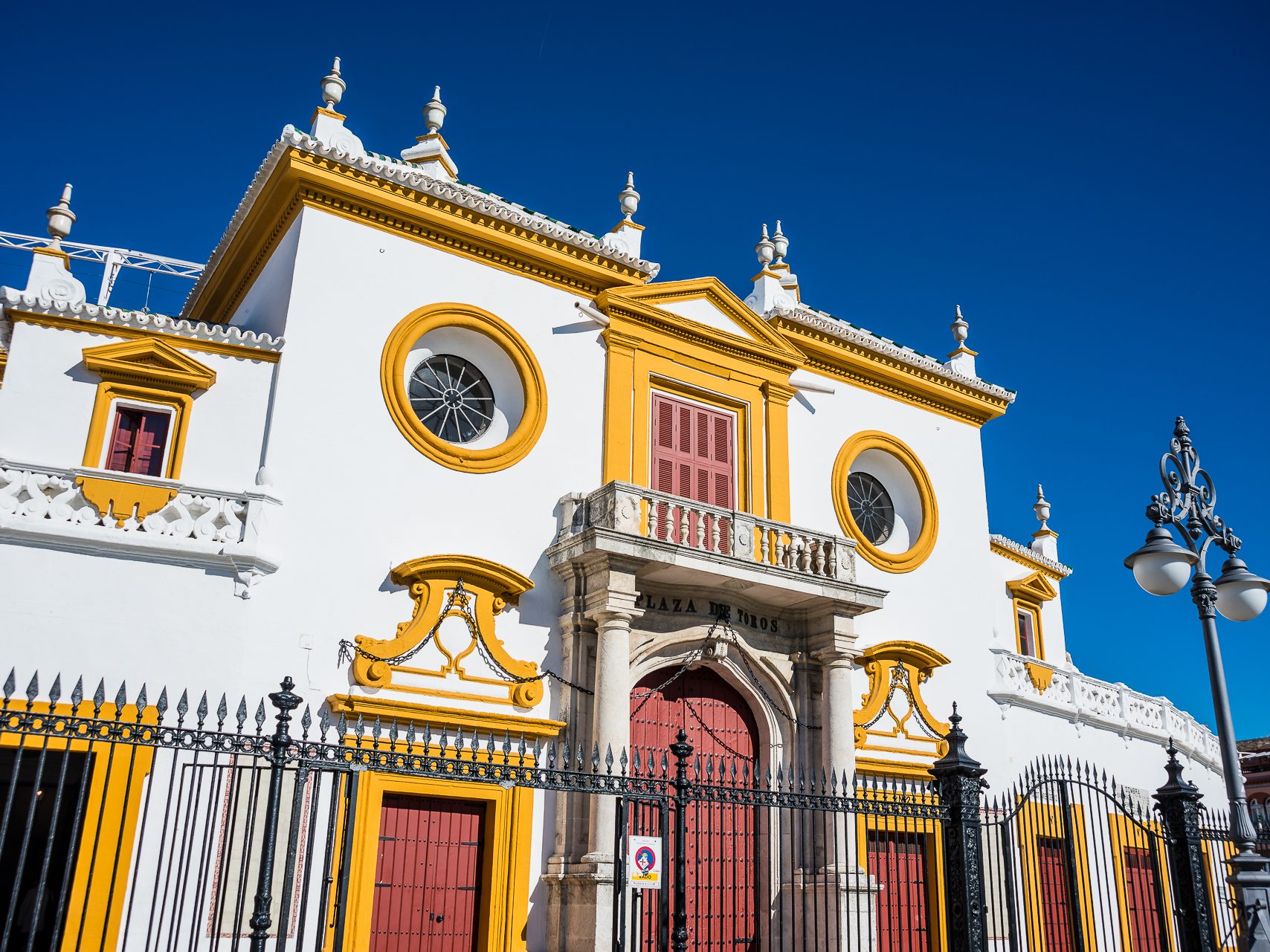
Bullfighting is an integral part of Sevillian culture, whether you are for or against it. We look at the arguments on both sides, then learn a little history and some basic facts about bullfighting today. We also visit the Seville bullring – the oldest in Spain – and its museum and hear from travel writers, novelists and poets what they thought about it all.
EPISODE 9: Flamenco
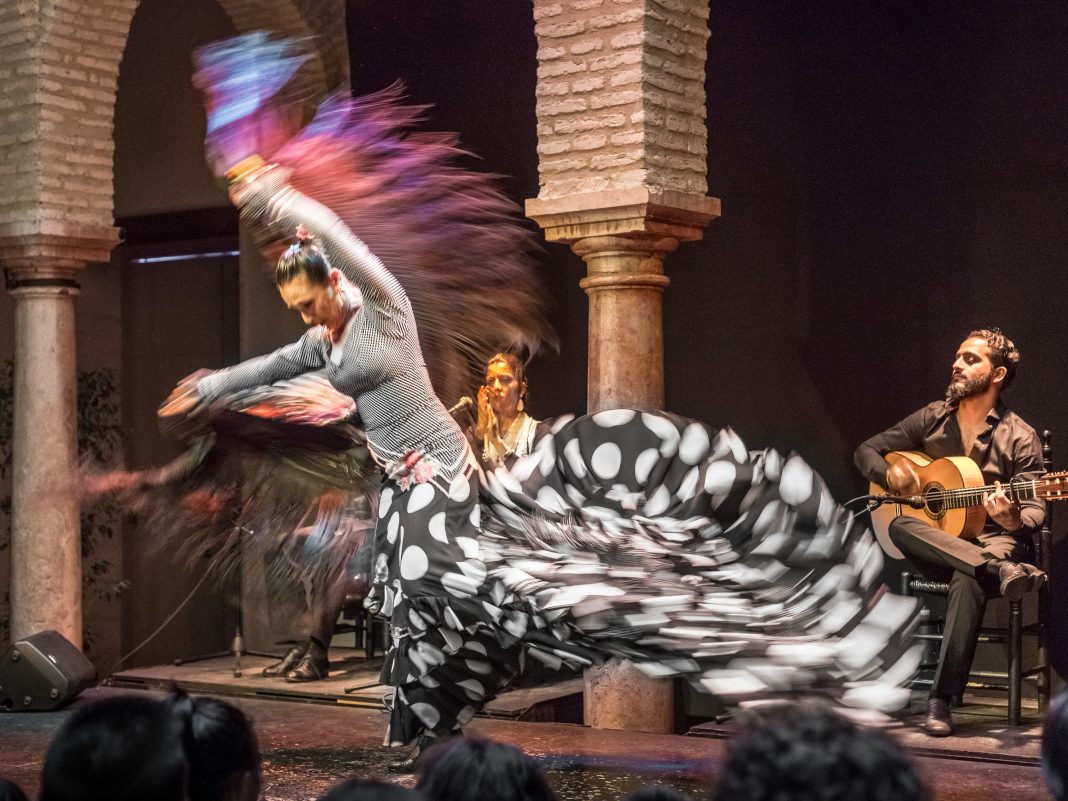
Flamenco originated in Andalucia and has a long tradition in Seville. Find out about its roots in gypsy culture and about all the aspects which combine to make this colourful, dramatic art-form so unique: music, song, rhythm, dance, gesture and costume. Hear about the Museo del Baile Flamenco, Seville’s flamenco museum with its informative displays and concerts and discover how various travel-writers reacted when they came across this highly emotional art form.

EPISODE 10: Art in Seville
Many of Seville’s art treasures date from the ‘Siglo de Oro’, the ‘golden century’ when the city grew rich on its role as the hub of New World exploration. First, we visit the Hospital de la Caridad and the Hospital de los Venerables where there are works by acclaimed painters like Murillo and Zurbaran. After short biographies of three famous painters with very Sevillian roots, it’s off to the Museo de Bellas Artes, where many of the paintings are by Spanish artists and where the stated aim is to be ‘an essential element in the cultural identity of Seville’.
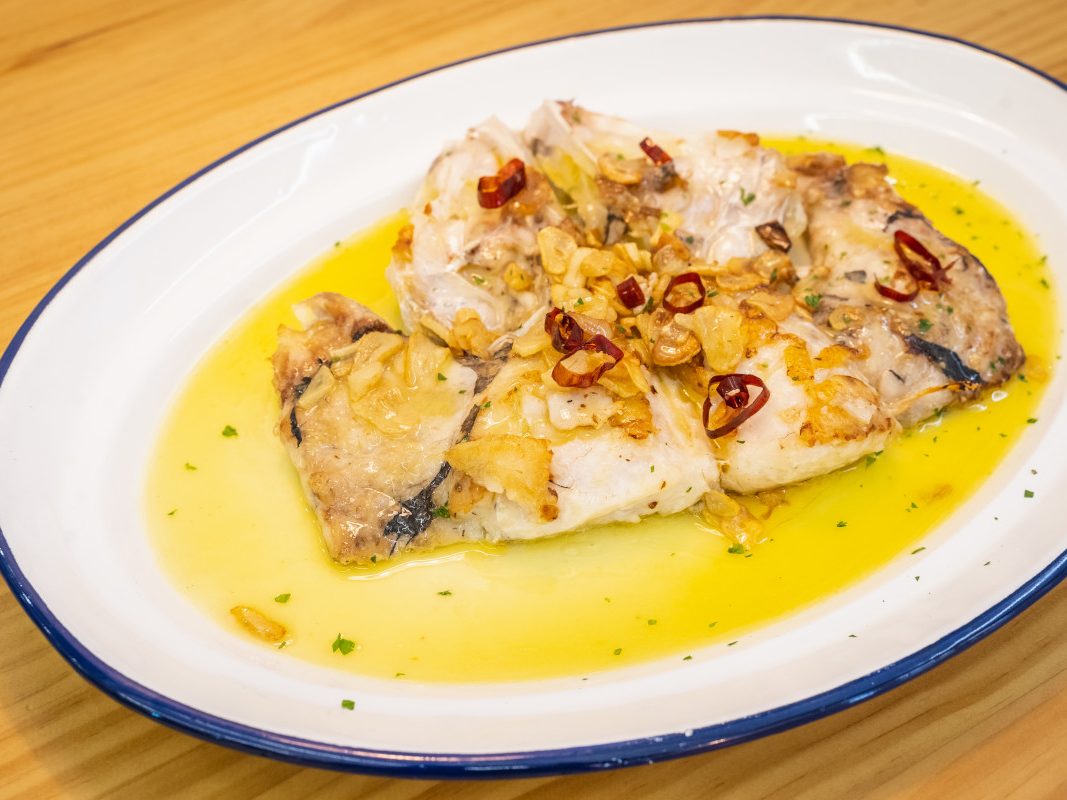
EPISODE 11: Gastronomia
A Spanish proverb says that he whom the gods favour will eat in Seville. (‘A quien Dios quiere bien, en Sevilla le da a comer’) This episode offers an overview of Andalucian food, from staples like olives and fish, to the delicious and seemingly endless array of little treats known as tapas. Hear about Arabic influences, sherry production and much more and savour the experiences of a number of travel writers who enjoyed what they ate and drank in Seville and then wrote about it memorably.
EPISODE 12: Travel Writers on Seville
First, some short quotations including one from Lord Byron, who famously praised the city for its ‘oranges and women’ and another from Jan Morris who wrote more poetically of the air which was ‘heavy with jasmine and orange blossom’. Then, time is devoted to writers of longer accounts. Enjoy hearing, for example, about Richard Ford’s ‘Handbook for Travellers in Spain’, written in the 1830s, Laurie Lee’s account of walking through Andalucia in the 1930’s and the writings of Jason Webster and Edward Lewine whose more recent travelogues focus respectively on a search for the country’s Arabic roots and its bullfighting tradition.

EPISODE 13: Stories of Seville
Hear stories about some of Seville’s best known fictional characters. We start with Cervantes’ low-life tricksters Rinconete and Cortadillo, operating in 16th century Seville. Then there’s Carmen, the fictional character originally created by Prosper Merimee, whose dramatic story so captured the imagination of 19th century readers that they thought she was real and came to Seville to meet her. And finally, Don Juan, whom no-one could ‘outsmart in gambling, duelling or making love’ and who was brought to life in stories, plays and operas by a number of writers. Discover too where to find traces of all three in today’s Seville.
MORE READING ABOUT Seville
4 useful websites for tourists
Visit Seville
Welcome to Seville
Andalucia: Seville
Seville City Guide
5 useful guidebooks
Seville City Plan by Michelin
Rough Guide to Andalucia
Eyewitness Guide to Seville and Andalucia
Lonely Planet Guide to Andalucia
A Guide to Seville: 5 Walking tours by P S Quick
6 books of travel writing
Spain by Jan Morris
As I walked out one Midsummer Morning by Laurie Lee
As I walked out through Spain in Search of Laurie Lee by P D Murphy
Death and the Sun by Edward Lewine (‘A Matador’s Season in the Heart of Spain)
Andalus by Jason Webster (‘A Quest to Discover Spain’s Moorish History’)
A Handbook for Travellers in Spain by Richard Ford (published 1845!)
3 Literary anthologies
Andalucia, A Literary Guide for Travellers by Andrew and Suzanne Edwards
Spain, A Literary Companion by Jimmy Burns
Seville, Cordoba and Granada: A Cultural and Literary History by Elizabeth Nash
2 novels which feature Seville
A Rose for Winter by Laurie Lee
Death in the Afternoon by Ernest Hemingway
PODCASTS TO GET YOU STARTED


OTHER CITY BREAK IDEAS






LATEST ARTICLES


GALLERY