
Our Amsterdam Anthology offers some different perspectives on the city as a way of ending the series. Here, you’ll find Amsterdam seen through the eyes of writers, some from the past, many contemporary. They include travel writers, authors of fiction and writers who just happened to mention Amsterdam in pieces they wrote. Between them they provide lots of different ways to get to know – or reminisce about! – the city. Here is just a flavour or what’s on the podcast – do listen to it to hear more and fuller extracts. The Diary of Anne Frank, perhaps the most famous book set in Amsterdam, is not here, it’s featured in Episode 07.
Amsterdam in Quotations
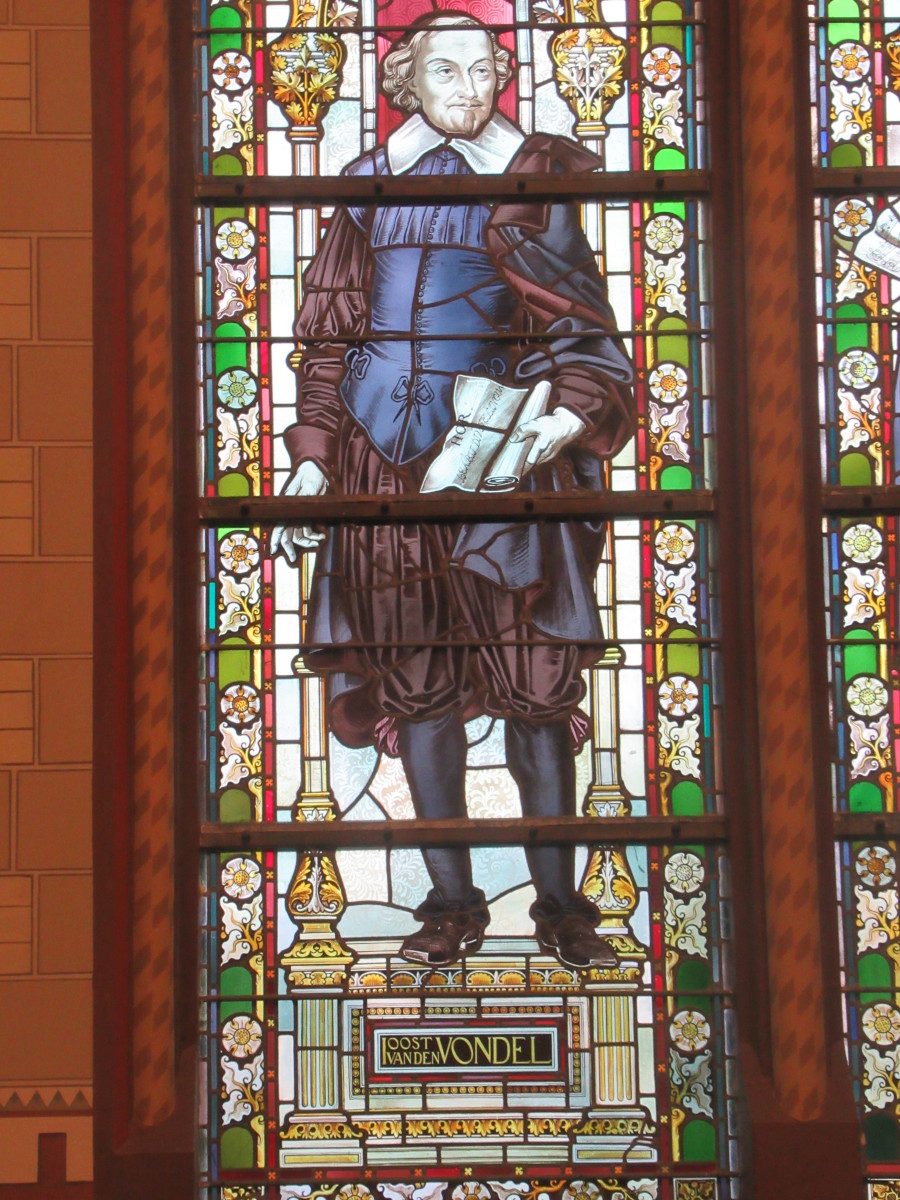
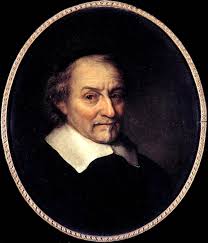
The podcast opens with a dozen or so quotations which could grace any Amsterdam anthology. They range from the thoughts of past centuries (Rembrandt and the best-known of all Dutch authors, Joost van den Vondel) to William Hazlitt who didn’t think much of Amsterdam and a whole range of authors who fell in love with it. Here’s a small selection – you can hear the full set on the podcast!
Joost van den Vondel on the power of 17th century Amsterdam:
‘What waters are not shadowed by her sails? On which mart does she not sell her wares? What peoples does she not see lit by the moon, she who herself sets the laws of the whole ocean?’
Jilly Cooper on why she loved the city PICS bridges, bikes, etc
“The thing that first knocked me out about Amsterdam, even on the coldest, greyest February day, was its beauty. The houses rise, red and grey, and seem to float swanlike above the canals. The sheen on the water is olive-green, and mallards with their brilliant emerald heads slide gravely under the bridges. if you close your eyes, you can see the city peopled again by those who built it – seventeenth century burghers in their black coats, rich from trading with the Indies.”
Terry Pratchett on why you need to beware of bikes in Amsterdam
“My experience in Amsterdam is that cyclists ride where the hell they like and aim in a state of rage at all pedestrians while ringing their bell loudly, the concept of avoiding people being foreign to them.”
Anthony Boudain explaining – twice – the city’s liberal atmosphere
“When you mention you’ll be making a stopover in Amsterdam, you get a reaction I can only describe as semi-collegiate. A knowing look … as if there can really only be 2 reasons you’d go to this lovely little city of canals.”
“Last time I was here I slept in a park because I spent all my money on hash and hookers.”
A Travel Memoir and a Short Story Collection

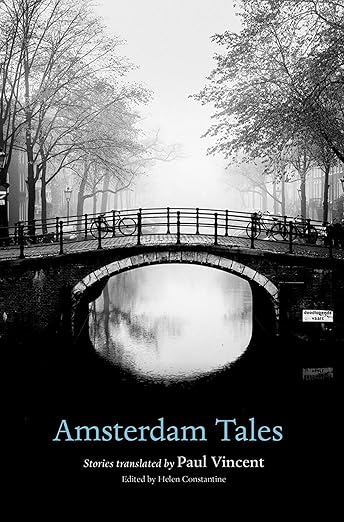
My Dam Life by Sean Condon recounts the 3 years the author spent in Amsterdam, prompting a reviewer in The Booklist to write ‘“Fans of offbeat travel literature rejoice! Stylistically and philosophically, Condon is as close to Bill Bryson as it’s possible to be. He mixes fascinating facts with hilarious humour… and keeps us thoroughly in stitches from beginning to end. The extract on the podcast describes his visit to a bar dating from the 1640s with ‘a low, exposed beam ceiling, a tiny staircase leading up to a tiny toilet, wood-framed windows and a panel of antique Delft porcelain allegedly discovered in the basement during renovations.’
Amsterdam Stories is a collection written under the pen name Nescio (which means ‘I don’t know’ in Latin!) in the early 20th century which, reads an Amazon review, ‘went unrecognized at the time but is now widely considered the best prose ever written in Dutch.’ There are two short extracts on the podcast, both describing walks in Amsterdam. One is set in the harbour area, the other begins ‘There was no-one on that stretch of Herengracht. The green and gold crowns of the trees were still thick with leaves. One by one, the yellow and brown leaves slowly fell. You could count them as they fell.’
novels linked to amsterdam
Amsterdam by Ian McEwen
Most of this book is not set in Amsterdam – the title is explained on the podcast – but one of the main characters, Clive, visits the city and at that point McEwan describes his walk through the city from Central Station. Here are a few lines from the extract which is read on the podcast, outlining what catches Clive’s attention as he walks along: ‘the beautiful brick and carved timber warehouses converted into tasteful apartments, the modest Van Gogh bridges, the understated street furniture, the intelligent, unstuffy-looking Dutch on their bikes with their level-headed children sitting behind. Even the shopkeepers looked like professors, the street sweepers like jazz musicians.’
The Miniaturist by Jessie Burton
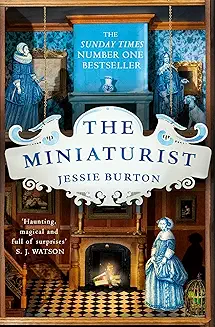
Jessie Burton wrote this after seeing Petronella Oortman’s famous doll’s house at the Rijksmuseum. The story she imagined begins as 18 year-old Nella Oortman, newly married, arrives at the big house on the Herengracht owned by her husband. Mysteriously, she finds he’s not there and soon becomes aware of strange goings-on in the house which seem somehow linked to the doll’s house her husband has bought her. The author Naomi Wood explained: ‘Like the intricately crafted doll’s house at the centre of the novel, there is a surprise behind each closed door and curtain – hidden worlds of deceit and seduction, guilds and guilders, candied walnuts and sugar loaves.’
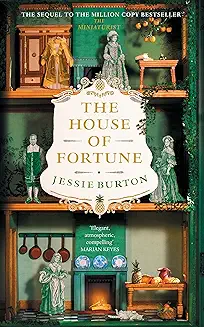
One Amazon reviewer described The Miniaturist as ‘beautiful, intoxicating and filled with heart-pounding suspense, … a story of love and obsession, betrayal and retribution, appearance and truth.’ The Washington Post writes of ‘a fine historical novel which evokes the sights, sounds and smells of 17th century Amsterdam’ and the extract on the podcast, describing Nella’s arrival at her new home on the Herengracht, illustrates this. Jessie Burton has also written a follow-up novel, The House of Fortune, also set in Amsterdam, which tells the story of Nella’s niece a generation later.
The Coffee Trader by David Liss
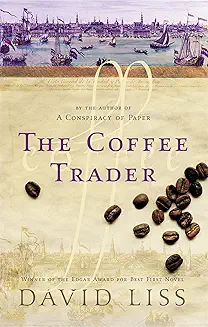
Set in Amsterdam in 1659, the story tells of Miguel, a newly impoverished Portugese Jew, who devises a scheme to make untold wealth through, as explained on the book jacket, ‘a daring plot to corner the market of an astonishing new commodity called ‘coffee.’ The reader gets to know the trading world in Amsterdam, in all its ruthlessness and betrayal. While wondering whom Miguel can trust and whether he will eventually succeed, the reader is taken into the streets, watersides and warehouses of 17th century Amsterdam. The extract on the podcast outlines how Miguel’s scheme should work. But, will it?
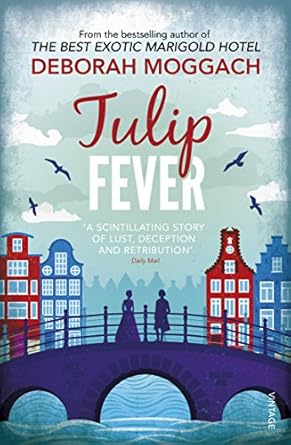
Tulip Fever by Deborah Moggach
This novel weaves the story of a wealthy merchant, Cornelis, his wife Sophia and the painter, Jan Van Loos, engaged to paint their portrait, against the background of tulip mania in Amsterdam in the 1660s. A dramatic plot unfolds, combining the desires and disappointments of the three main characters with the fast-moving economic crisis as people speculate ever more crazily on tulip bulbs, hoping to make their fortune. It’s particularly good on the role of art and artists in Amsterdam, sometimes slipping descriptions of well-known paintings into the plot, for example in a scene when Sophia’s description references Vermeer’s ‘Girl Reading a Letter’. Here’s a little taste of that from the opening of Chapter 12.
‘Sophia stands at the window. She is reading the letter. Through the glass, sunlight streams onto her face. Her hair is pulled back from her brow. Tiny pearls nestle in her headband; they catch the light, winking at the severity of her coiffure. She wears a black bodice, shot with lines of velvet and silver. Her dress is violet silk; its pewtery sheen catches the light.’
Listen to the podcast
Reading suggestions
My Dam Life by Sean Condon
Amsterdam Stories by Nescio
Amsterdam by Ian McEwen
The Coffee Trader by David Liss
The Miniaturist by Jessie Burton
The House of Fortune by Jessie Burton
Tulip Fever by Deborah Moggach
links
Previous Episode Food and Shopping in Amsterdam
This is the last episode in our Amsterdam series
Last Updated on January 6, 2026 by Marian Jones