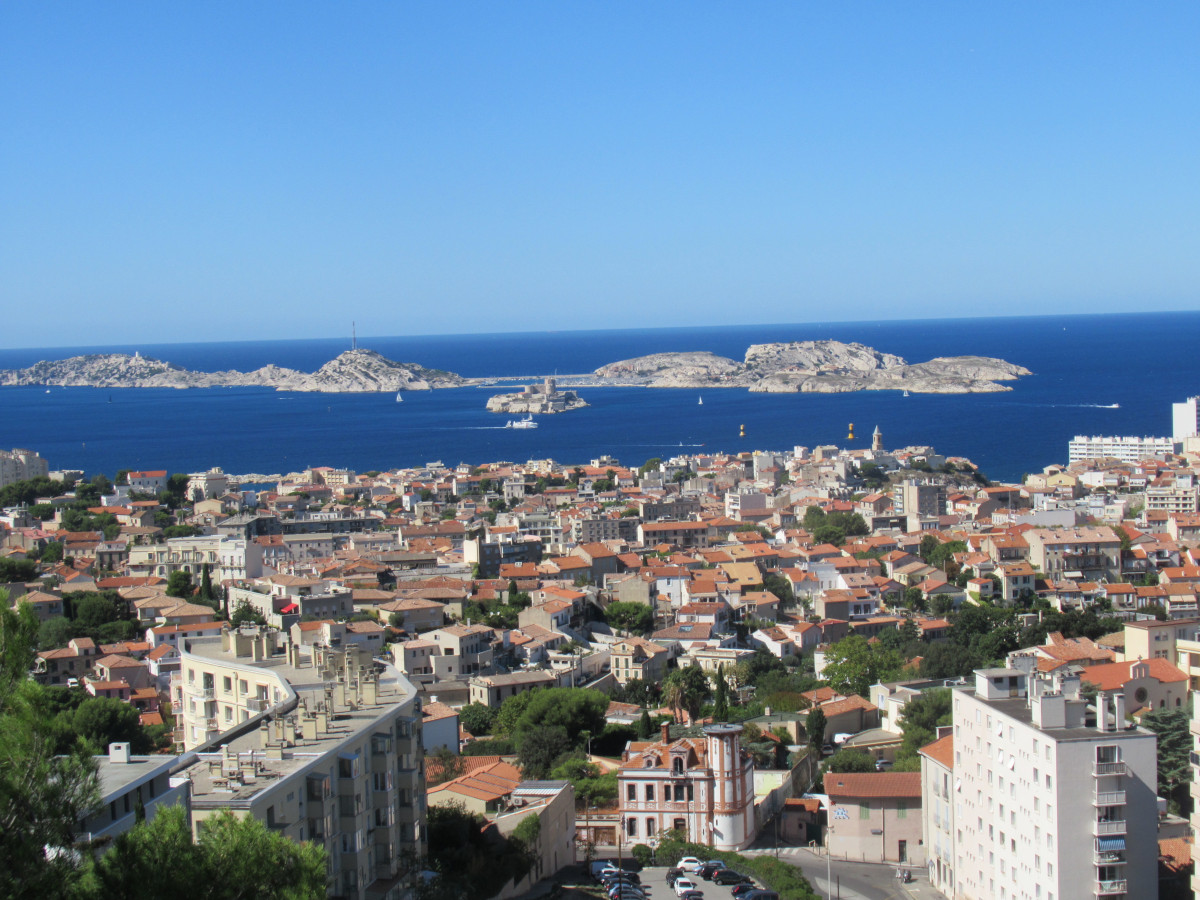
It’s surely no coincidence that Marseille rhymes with ‘soleil’, for the sun shines hot in this southern French port city. It mixes beauty – a picturesque harbour, surrounding hills, a stunning coastline – with a certain grit. Europe’s Capital of Culture in 2013, Marseille is a multicultural city where you can enjoy Mediterranean bouillabaisse and North African couscous, street art and fine art, two millennia of history and a modern outlook.
The 10 episodes in our City Break Marseille series bring you all the background history and culture you need to fully understand this fascinating city. In short, here is all the research you’d do yourself if only you had the time.
Each episode centres around a podcast, available here or on all the usual providers. As a minimum, you’ll also find an introductory summary plus useful links and ideas for further reading. Eventually, there’ll be full blogpost with lot more information and pictures.
MARSEILLE : HISTORY & CULTURE
EPISODE 1: Introduction to Marseille
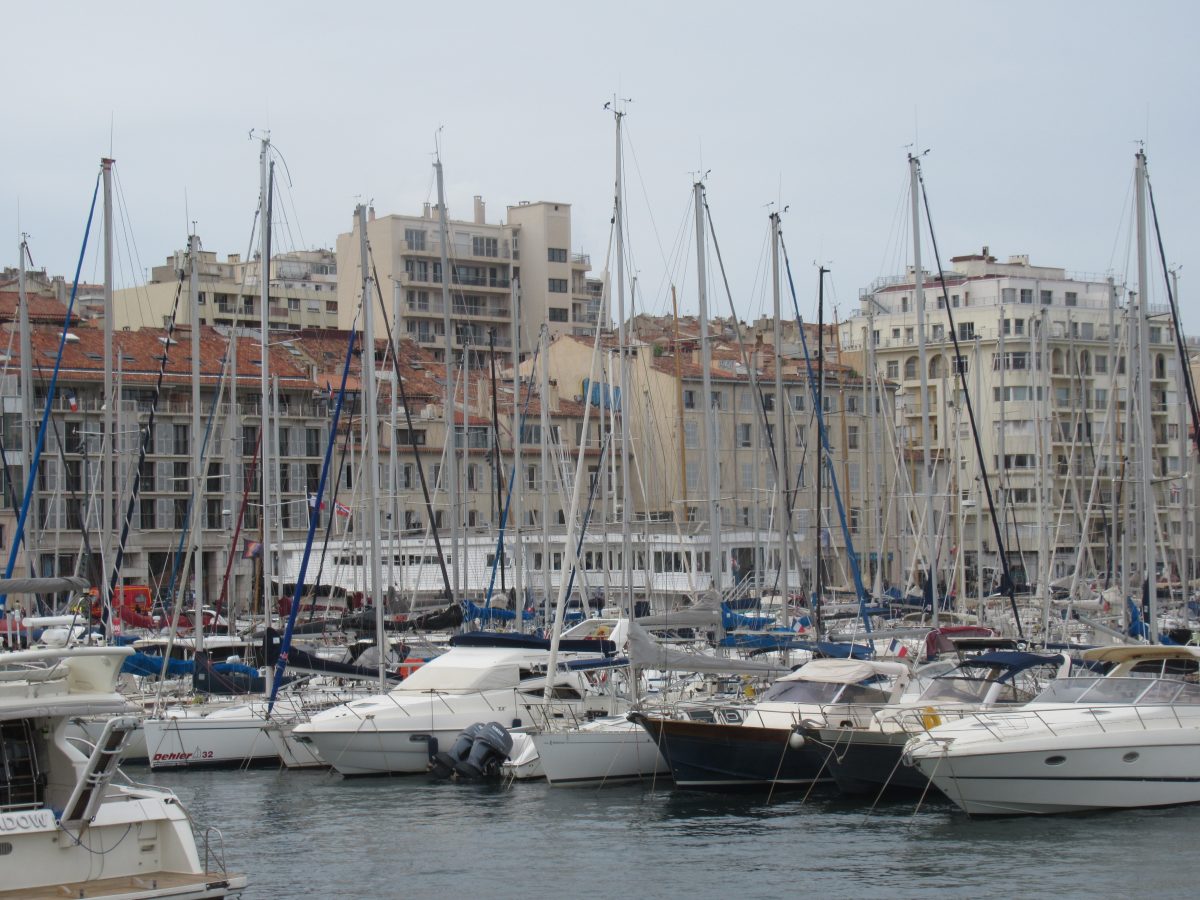
Bienvenue à Marseille. Welcome to Marseille, the lively southern French city whose name rhymes with ‘soleil’. There’s beauty in the Old Port and the stunning coastline, there’s history and culture a-plenty in the museums, there’s a Provencal feel – boules and bouillabaisse – overlaid with a vibrant multi-ethnic mix.
EPISODE 2: History in Marseille
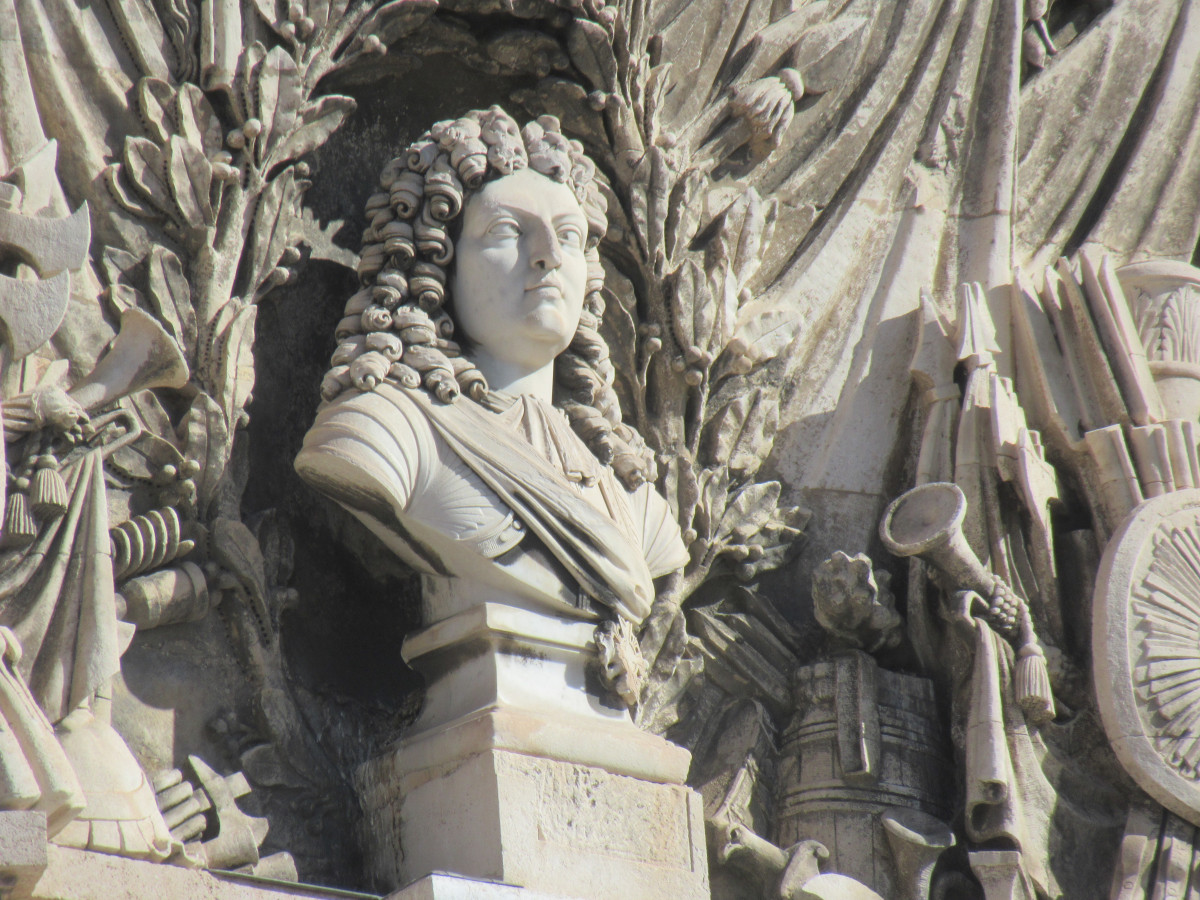
There are 26 centuries of history in Marseille, which is the oldest city in France! This episode runs through 10 places where you can find traces of key moments in the city’s past. They range from the plaque commemorating the founding of Marseille in about 600 BC to the site where you can still see bullet holes from the fight to liberate the city from German occupation in 1944. They’re listed in chronological order, with a few of their stories attached and although this makes a good overview, we’ve saved some of the ‘big-hitters’ such as Notre Dame de la Garde and the Château d’If for later episodes where they’ll get a fuller treatment.
EPISODE 3: The Old Port, the Canebière and Notre Dame de la Garde
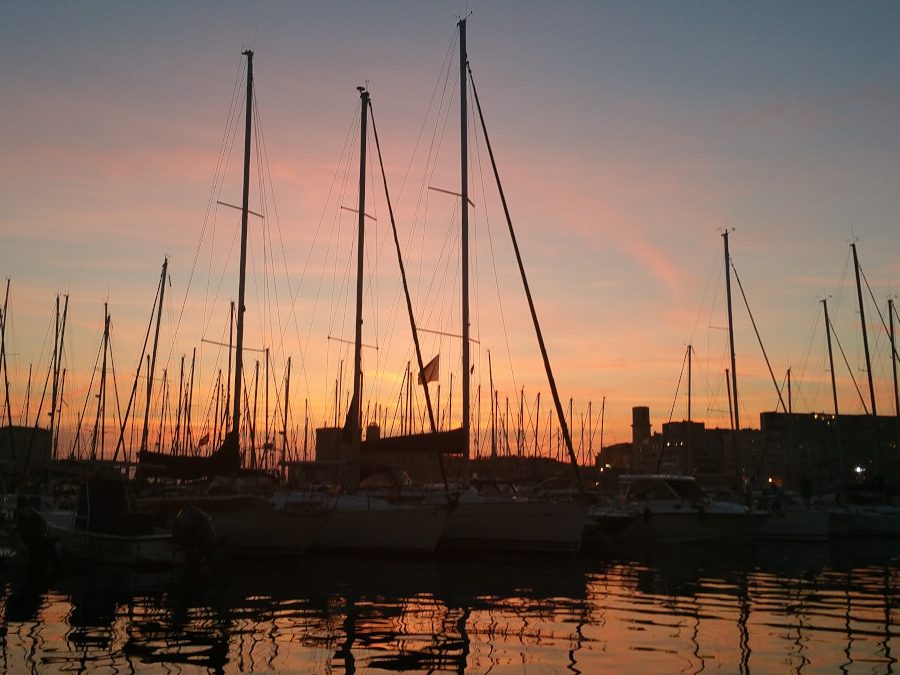
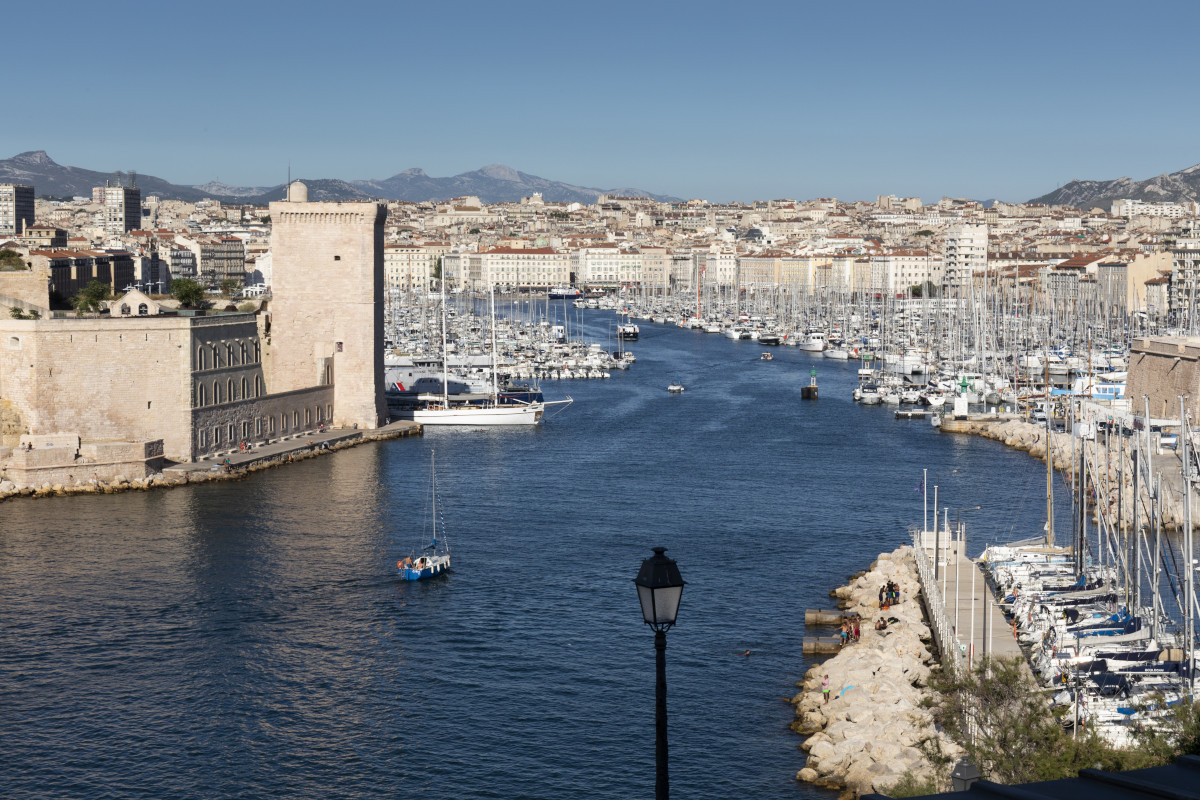
This episode centres on Marseille’s most popular sights, the Old Port, the hilltop church of Notre Dame de la Garde, and the Canebière, the wide avenue leading back from the port into the heart of the city. After a few snippets of history, we tour such sights as the fish market, the iconic canopy built to mark Marseille’s year as a City of European Culture in 2013, an ancient tower and a surprising link to Odessa in Ukraine. We might take the little ferry across the harbour, we’ll certainly walk – or maybe take the ‘petit train’ – up the hill to Notre Dame de la Garde, where a huge golden statue of Mary the Virgin watches protectively over the city.
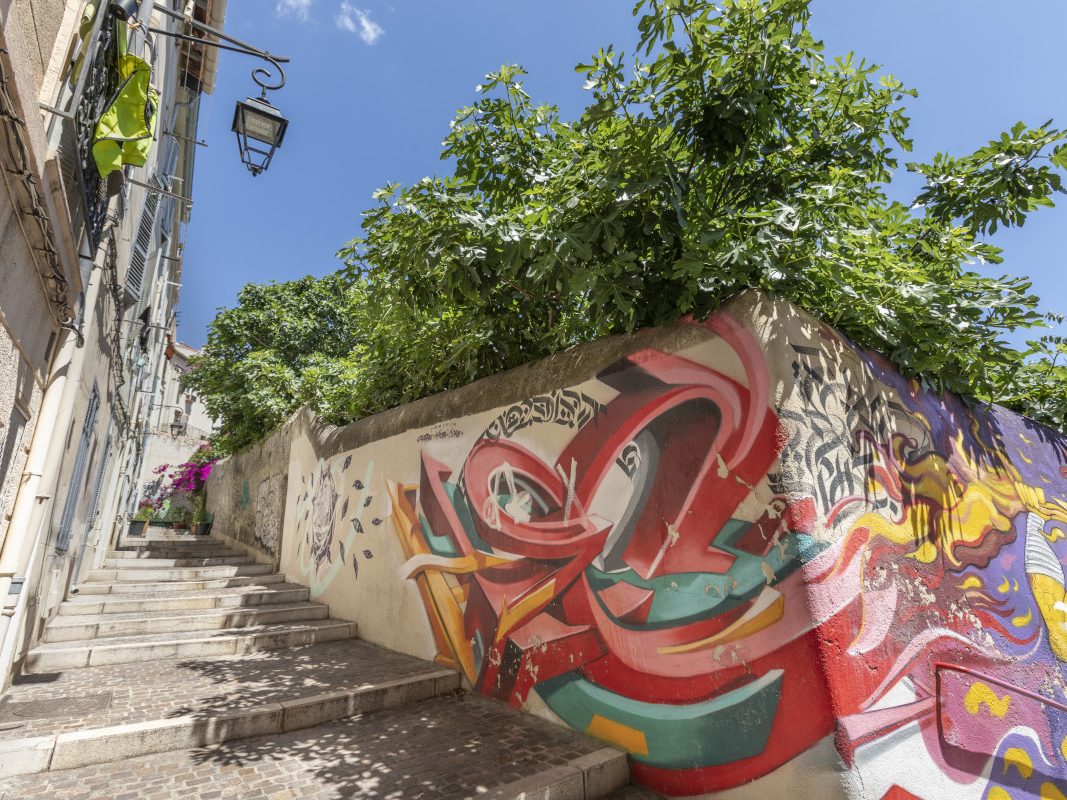
EPISODE 4: Le Panier
This post focuses on the Le Panier district of Marseille, the oldest and most atmospheric part of the city: think hills, narrow roads, colourful houses, flowers, little restaurants in pretty squares, artisan shops and plenty of street art. Plus two of the city’s big sights, La Charité, the former poorhouse, now a museum centre and the stunning ‘Major’ Cathedral. As the author Jean -Claude Izzo wrote. ‘To linger in Le Panier is to feel the old heart of Marseille throbbing’.
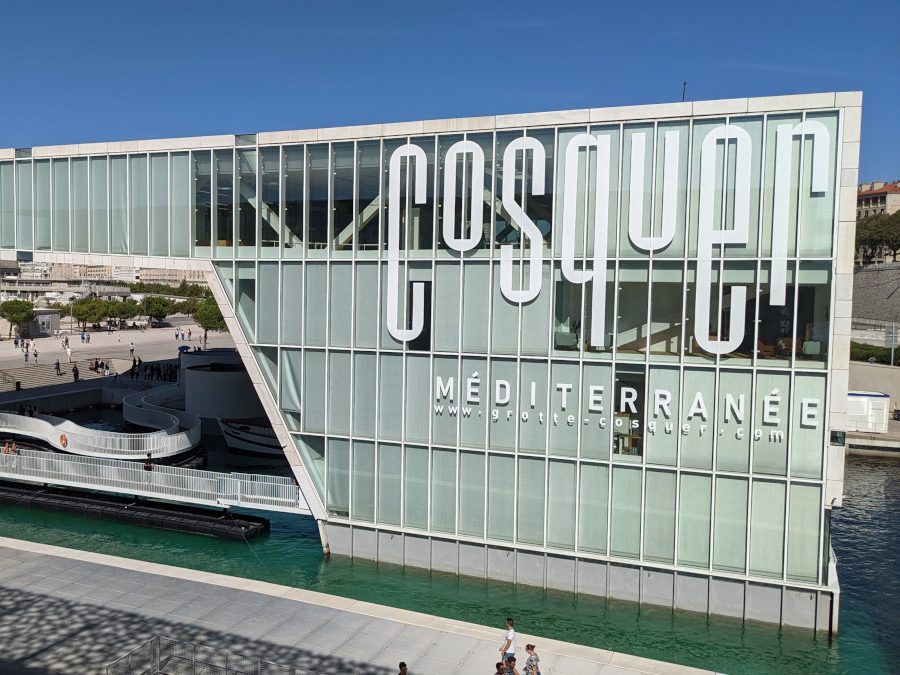
EPISODE 5: La Joliette, the Mucem and Cosquer museums
This post takes you around La Joliette, the new port area in Marseille and looks at what there is to do there. That includes the city’s two newest must-see museums – one gives you a tour of Mediterranean culture, the other takes you on a virtual exploration of the incredible caves discovered nearby, where the artwork dates back 30,000 years. We also find time for plenty of shopping, eating and culture in both historic and ultra-modern settings, all with a magnificent sea-view backdrop.

EPISODE 6: Art in Marseille
This episode covers two main Marseille art galleries, the Musée des Beaux Arts and Regards de Provence, and focuses particularly on work on local themes – Marseille itself, and the provençal hinterland. Then there are pointers to 4 more galleries in the city, featuring ethnic, modern and decorative arts, plus a little coverage of some of the most famous artists associated with Marseille: Pierre Puget, César Baldaccinni and Paul Cézanne. Lastly, a reminder that in this city, art often means street art!
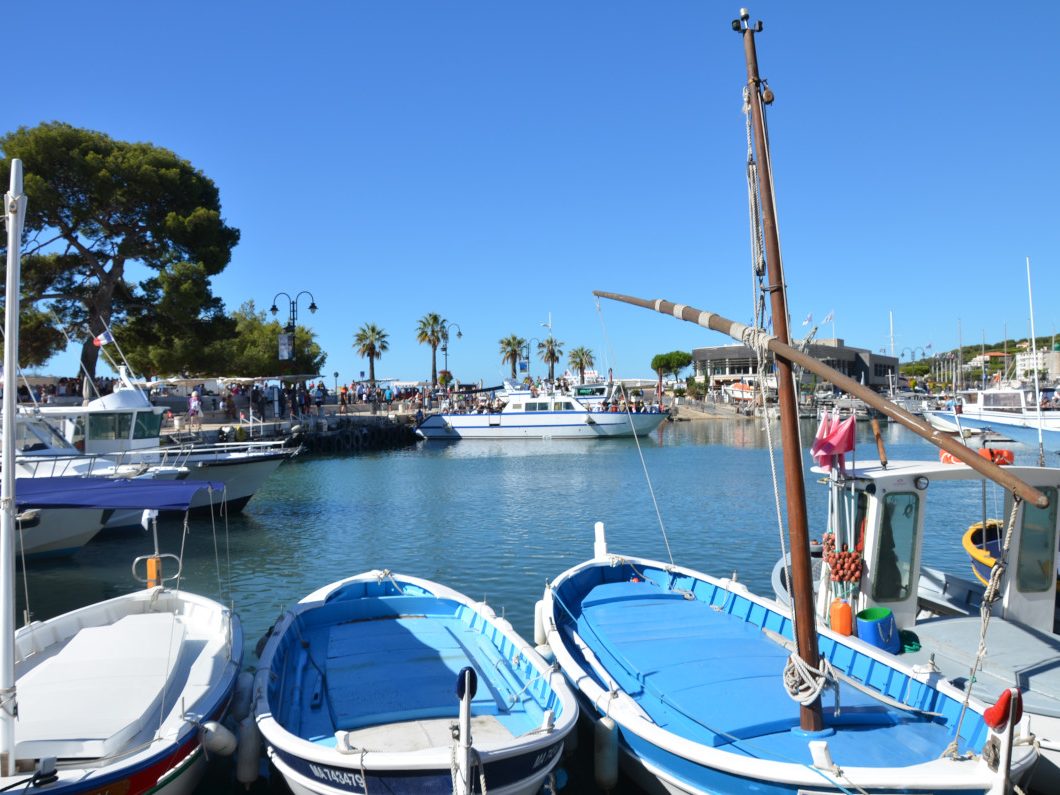
EPISODE 7: Boats, Beaches and the Château d’If
Marseille boat trips – those words belong together. But beaches and the Château d’If are also great ideas for trips out from Marseille and so this episode covers all three. Then there are suggestions for other little excursions, to l’Estaque and Cassis, which both mix boating and arty vibes, plus a trip on a coastal train with views a-plenty and ideas for stopping off to explore. To finish, there’s a little flavour of the Count of Monte Cristo’s daring – and fictional! – escape from the Château d’If.
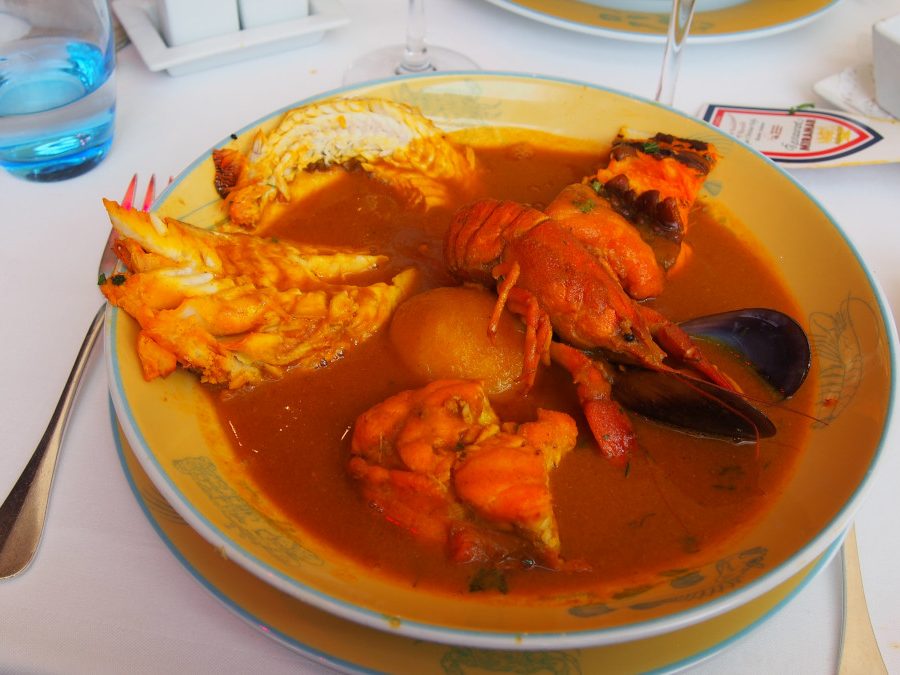
EPISODE 8: Food & Shopping
This post introduces you to two great pleasures in this Provencal city: Marseille food and Marseille shopping, beginning with the signature dishes and key ingredients of the city’s cuisine, plus a few ideas on where to look for restaurants. Then, we outline key items to buy as souvenirs of Marseille, followed by a rundown of the city’s main shopping areas and what you can expect to find in each one.

EPISODE 9: Marcel Pagnol
The author and film-maker Marcel Pagnol is inextricably linked with Marseille – where he lived, set some of his early works and is buried – and with the Provencal countryside around the city. The area’s garrigue landscape provides the backdrop to his popular autobiographical works, La Gloire de Mon Père (My Father’s Glory) and Le Château de Ma Mère (My Mother’s Castle) and is also the setting for his gripping novels, Jean de Florette and Manon des Sources. This episode gives a little biographical information, an idea of where to ‘find’ him in the area today and some appetite-whetting snippets of his work.
EPISODE 10: Anthology
Our Marseille Anthology includes some travel writing, plus a range of fiction pieces set in the city. Extracts include Simone de Beauvoir hiking in the surrounding countryside and Jean-Claude Izzo’s description of the Italian immigrant community in Le Panier in the 1930s. The Count of Monte Cristo’s daring escape from the Château d’If is here, as are a meal of boullabaisse in a waterside restaurant and a visit to the underwater caves where prehistoric man left artwork behind. There are even two passages which help explain why Marseille has sometimes been called ‘the wicked city’.
Marseille: links and reading
Three useful websites for tourists
Marseille Tourist Office
Marseille Tourisme.fr
About France: a short guide to Marseille
3 Guide Books
The Rough Guide to Provence and the Cote d’Azur
Marseille Travel Guide by Angela J Rea
Marseille Travel Guide by Betty Vanslyke
4 books on Marseille Culture
The Wicked City The many cultures of Marseille by Nicholas Hewitt
Garlic, Mint and Sweet Basil by Jean-Claude Izzo
Unveiling Marseille Your Insider’s Guide to the Multicultural Marvel by Tailored Travel Guides
Taste the World in Marseille by Vérane Frédiani
Literature
Marcel Pagnol wrote a trilogy of plays set in Marseille: Marius, Fanny and César. All three were also filmed.
Try eBay or other second-hand sites to track them down.
Pagnol’s two books of childhood memoirs centre on the Provençal countryside just a few miles outside Marseille.
Memoirs of a Provence Childhood by Marcel Pagnol
This comprises 2 autobiographical novels in one volume: My Father’s Glory and My Mother’s Castle
Marseille Noir
This is the collective name for gritty crime fiction set in Marseille. The best-known examples are the Jean-Claude Izzo trilogy
Total Chaos by Jean-Claude Izzo
Chourmo by Jean-Claude Izzo
Solea by Jean-Claude Izzo
The First Fingerprint by Xavier-Marie Bonnot
Marseille Noir by Cédric Fabre
More Fiction set in Marseille
The Count of Monte Cristo by Alexandre Dumas
The Marseille Caper by Peter Mayle
PODCASTS to get you started

OTHER CITY BREAK IDEAS






LATEST ARTICLES


GALLERY
