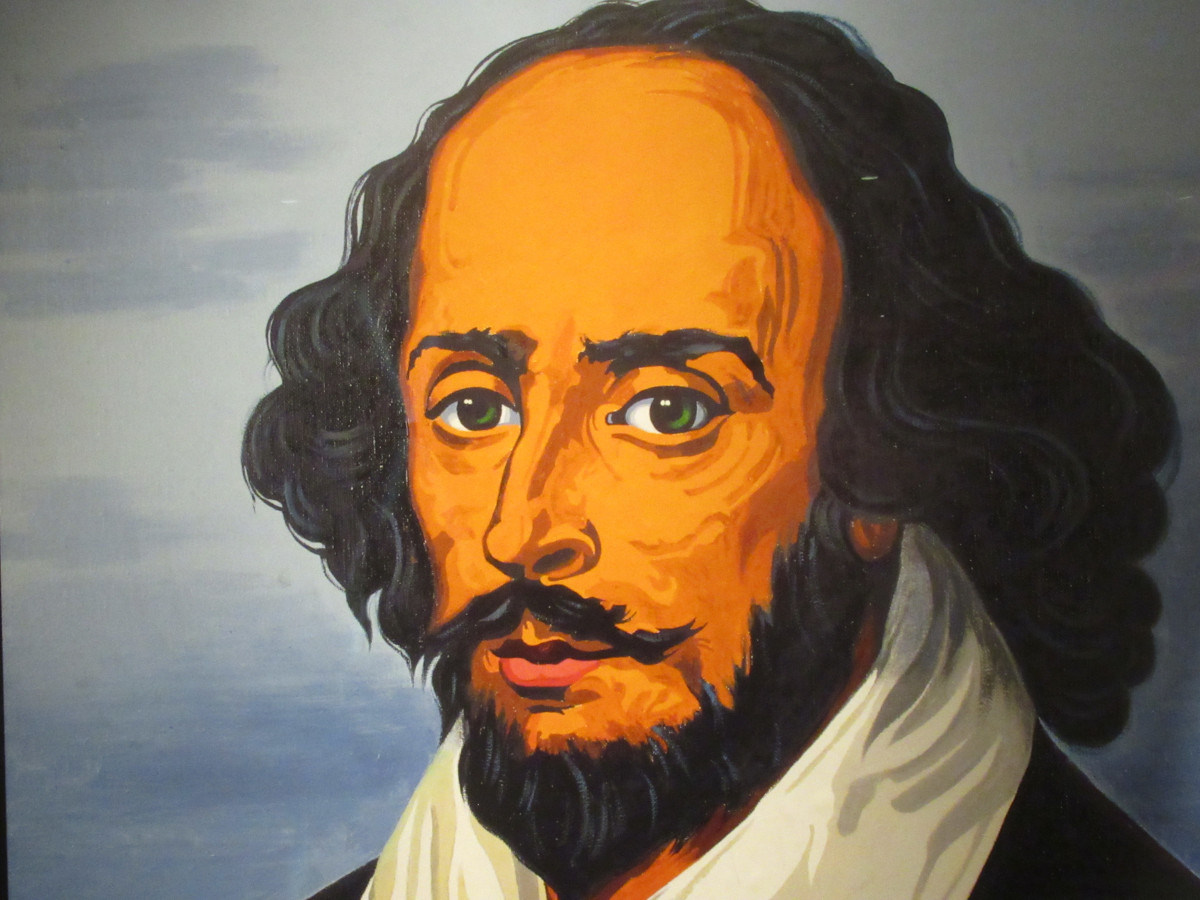
Stratford has many charms – its Tudor ambiance, its riverside setting – but really there’s only one reason why it attracts up to 6 million visitors in a year. Shakespeare. And this episode is dedicated to him: a little biography, focussing mainly on his Stratford years and a run-down of all the places in the town where you can ‘find’ him today. As usual, there is much more detail on the podcast.
a little biography
One historian wrote that all the records we have tell us about Shakespeare is that ‘he was born in Stratford-Upon-Avon, produced a family there, went to London, became an actor and a writer, returned to Stratford, made a will and died.’ That’s a slight exaggeration – here’s a little more detail.
Church records show that William Shakespeare was baptised in Stratford’s Holy Trinity Church on April 26th, 1564. His birthdate is not known for sure, but is estimated to be April 23rd because babies were often baptised at 3 days old. His parents, John Shakespeare and Mary Arden, had already buried two baby daughters and the plague arrived in Stratford just months after William’s birth, so his survival was against the odds. He grew up as one of 5 children, alongside brothers Gilbert, Richard and Edmund and a sister, Anna, who died at the age of 7 in 1571.
William’s father was primarily a glover, alongside other activities including ‘brogging’ (unlicensed trading in wool) and being an alderman and, later, mayor of Stratford. One of his tasks in that role was to inspect travelling theatre companies to decide whether to grant them a licence, something which Will almost certainly witnessed and which perhaps sparked his love of plays and the theatre. He’s thought to have attended the local school – although there’s no actual record of this – until the age of about 14. At 18, we know he married Anne Hathaway, a yeoman’s daughter from a neighbouring village and that they had 3 children: Susanna, born in 1583 and twins Hamnet and Judith, probably born early in 1585.
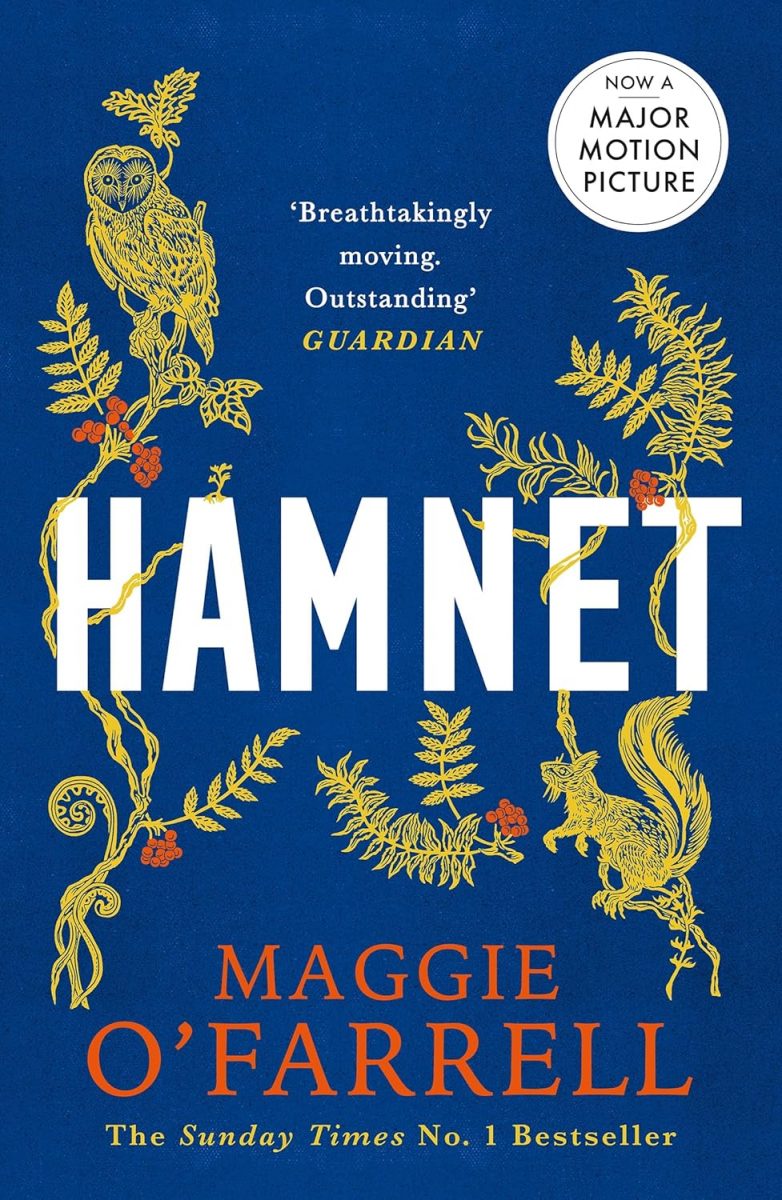
By 1587 Shakespeare was almost certainly in London and from then, things are less certain. We know he made his name as a playwright, also acting and eventually part-owning a theatre and that he made a lot of money. We assume he returned regularly to Stratford, where he invested in property, but the details are scant. Tragedy struck in 1596 when his son Hamnet died, probably of the plague, a story fictionalised by the author Maggie O’Farrell. A year later he bought New Place, a large property reflecting his wealth at this later stage in his career and it was his Stratford home until 1616 when he died.
It’s not clear how he died, but one Reverend Ward, writing 50 years later, suggested it was because ‘Shakespeare, Drayton and Ben Johnson had a merry meeting and it seems drank too hard for he died of a fever there contracted.’ A funeral procession accompanied his coffin from New Place to Holy Trinity Church where he was buried. Two generations later, his only grandchild Elizabeth’s three children, a boy named Shakespeare and two daughters, died while still young and his direct line was no more.
Shakespeare’s birthplace
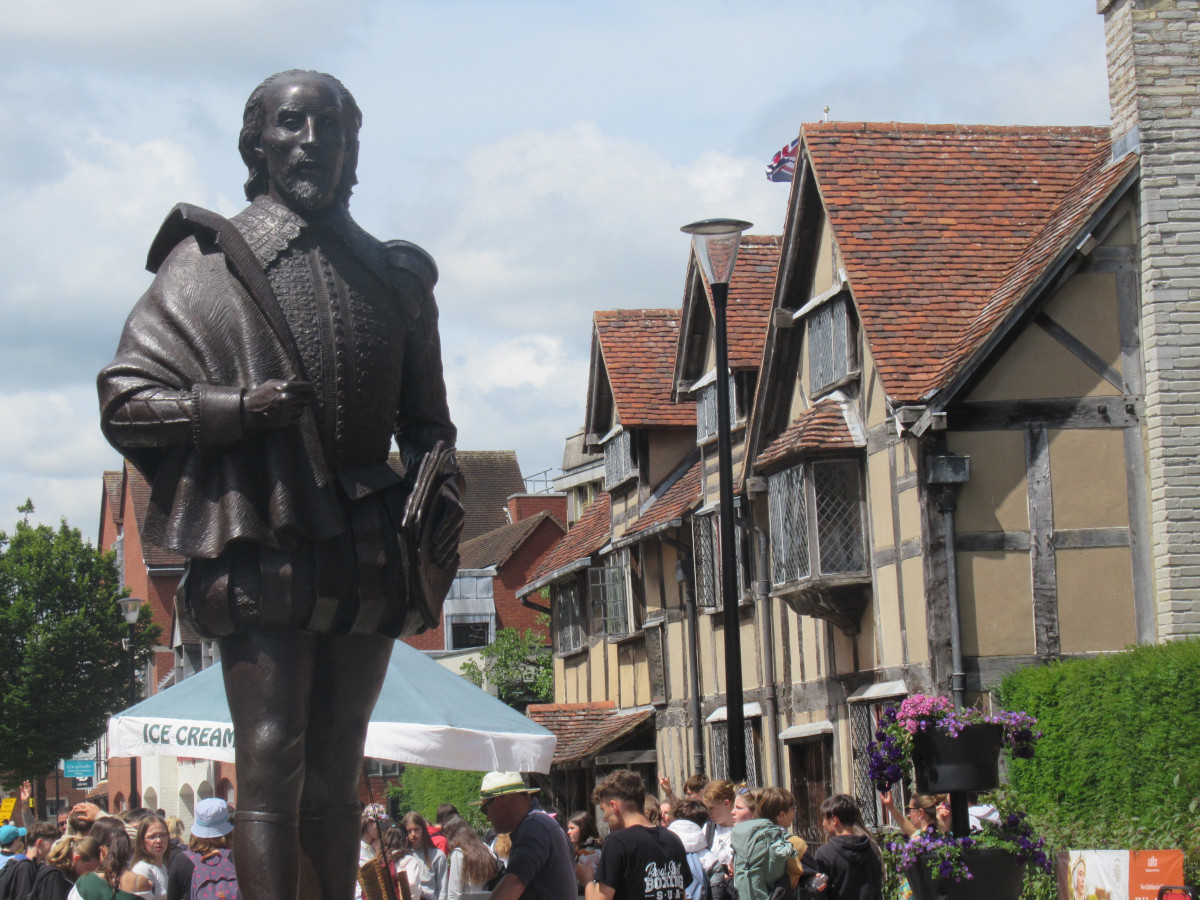
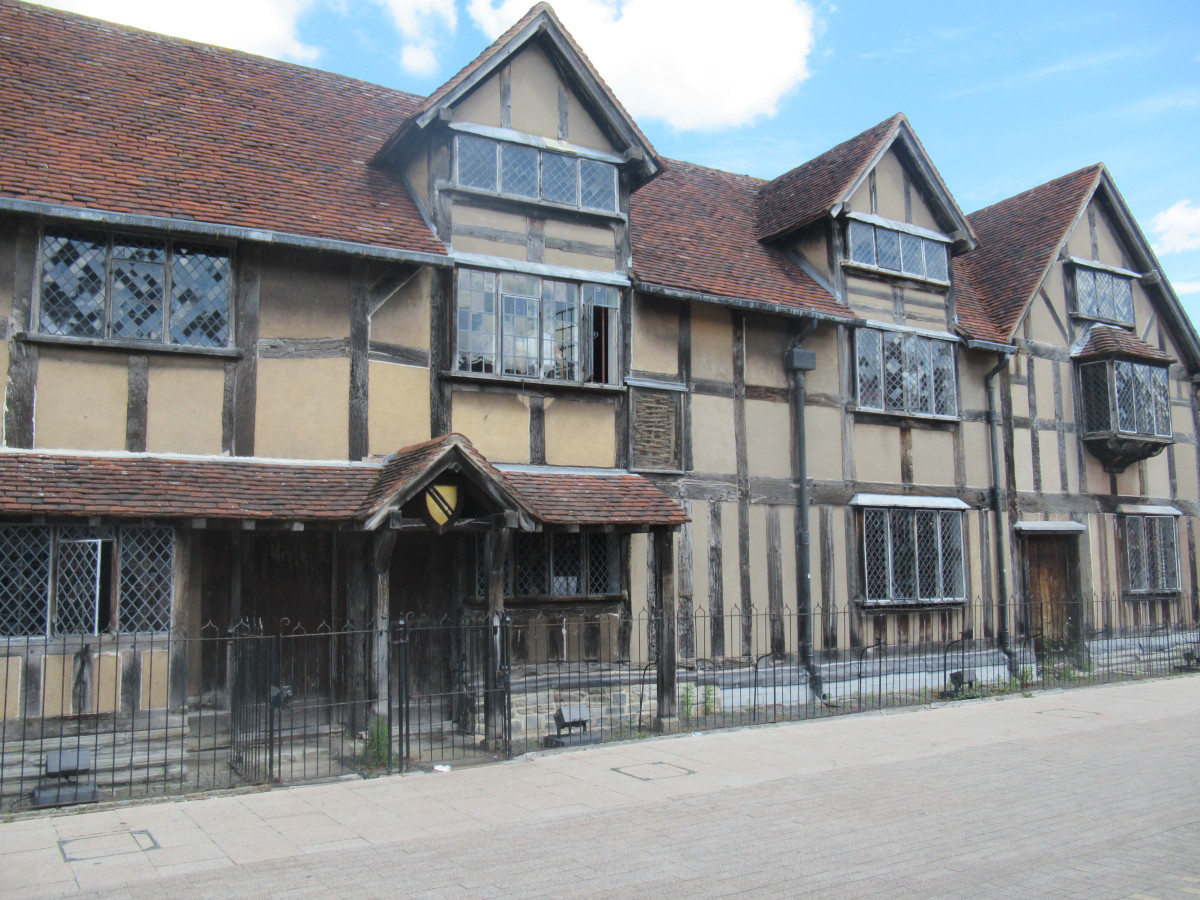
This is the most-visited site in Stratford, a large house in Henley Street where Shakespeare grew up. It was a family home and also his father’s workshop, with outbuildings at the back where he probably treated leather and plenty of room to grow vegetables and keep a pig. Today the main rooms – a parlour, the workshop and bedchambers – are furnished as they would have been when Shakespeare lived there, including with one or two pieces of furniture from the 16rh century. There is a museum attached with a lot of information and some interesting artworks. Shakespeare inherited the house in 1601 and left it to his daughter Susanna in his will. Today it is run by the Shakespeare Birthplace Trust.
shakespeare’s schoolroom and the guildhall
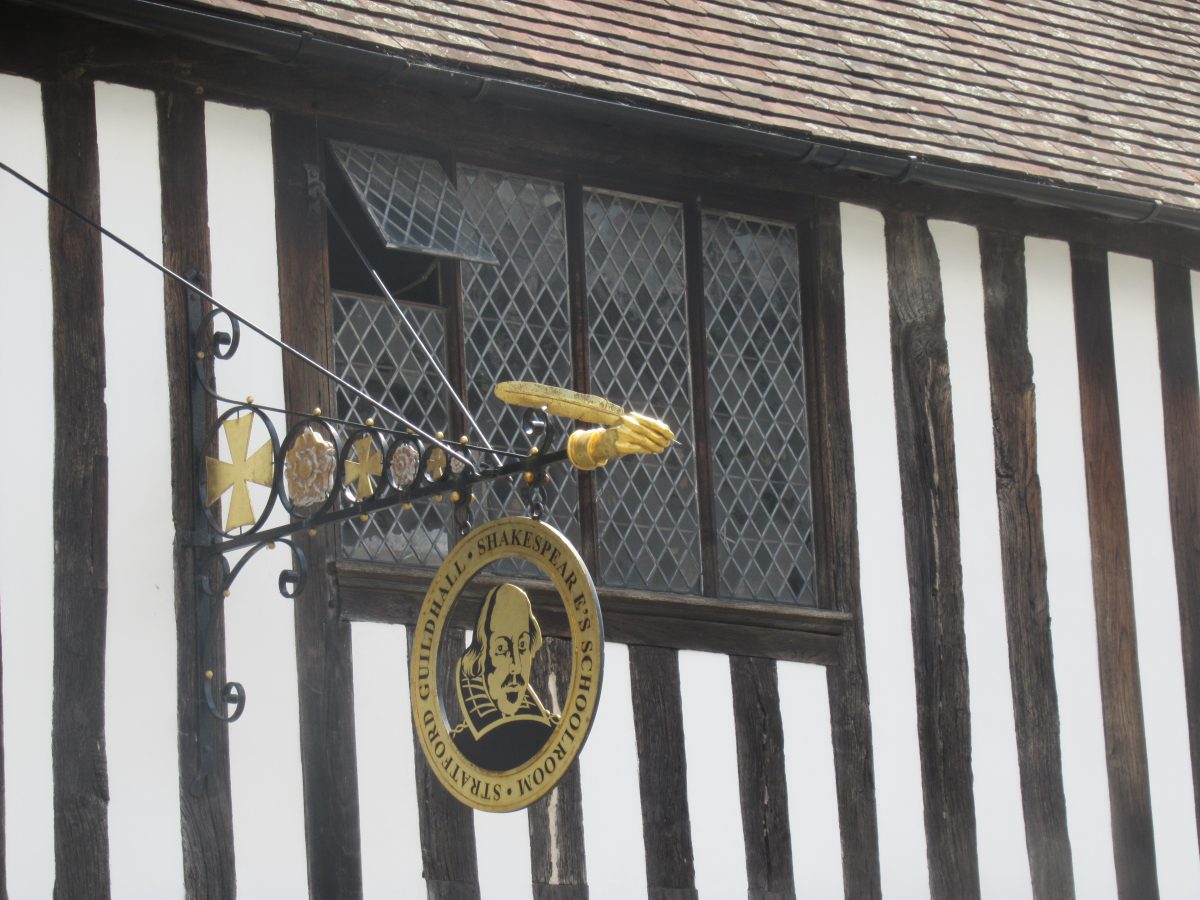
The lower floor of this beautiful half-timbered building is the former Guild Hall, from which the town was governed and where John Shakespeare served as mayor. You can see the remains of a chapel from its pre-Reformation days and visit the counting room where a locked box for storing money and important documents, used in Shakespeare’s day, is on display. Artworks and information explain how the room was used as a court.
Upstairs is the schoolroom, where Shakespeare almost certainly attended lessons between the ages of about 7 and 14. One room is set out with 8 benches, the ‘forms’ for each year group of children and next door are desks complete with inkwells and quill pens to try out. An actor plays the role of the teacher and will tell you all about what school life would have been like for a boy like William Shakespeare.
School was held on 6 days a week, from about 6.00am to 5.00pm. Boys (yes, just boys) provided their own books, candles and writing materials and learned mainly Latin, the key to university entrance or entering the professions. There was lots of rote-learning in order to master the grammar, but as boys progressed they would also have read classical literature, perhaps Ovid, Virgil or Horace. It’s thought that his teachers enjoyed getting the pupils to act out some of the stories, perhaps something which first introduced Shakespeare to the pleasures of drama. It was also here that he almost certainly watched visiting companies of players acting and may even have been asked to be an extra on occasions.
anne hathaway’s cottage
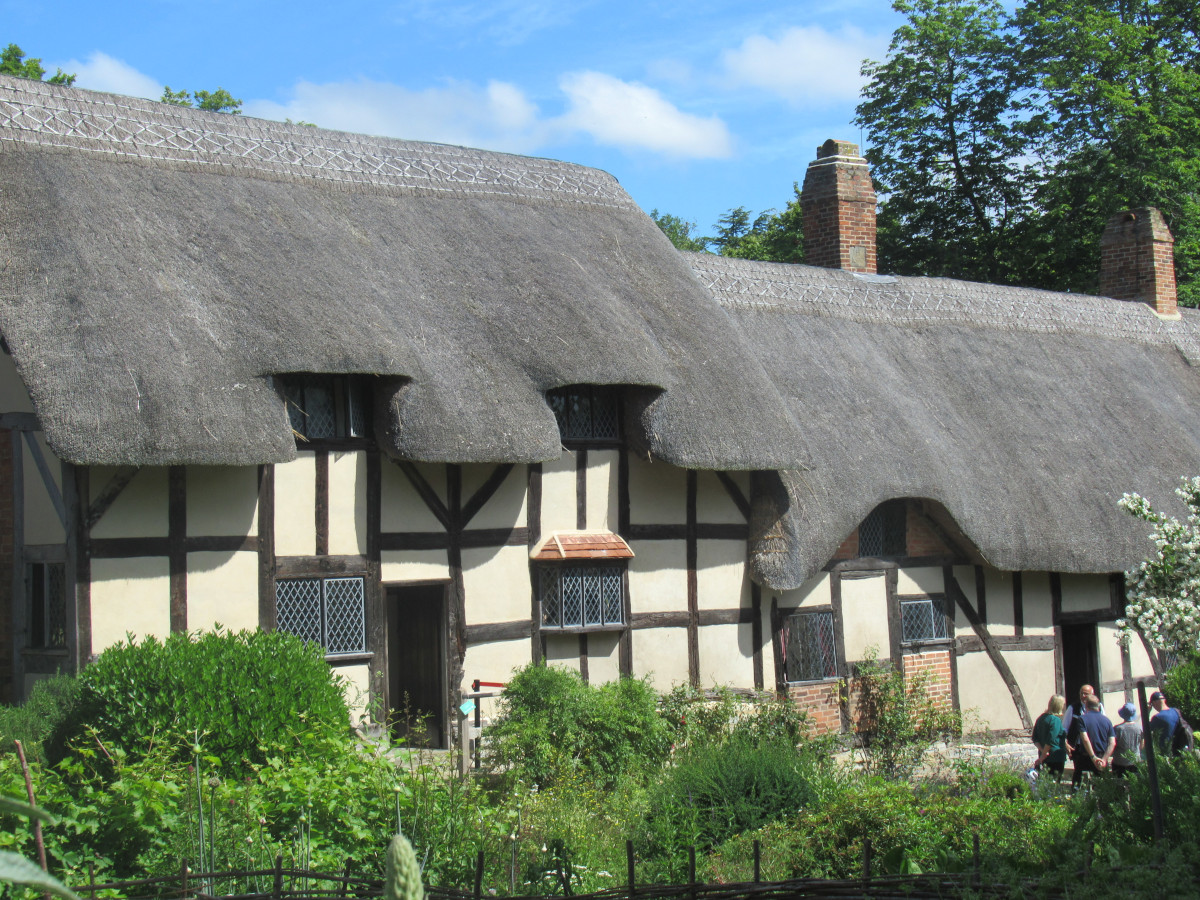
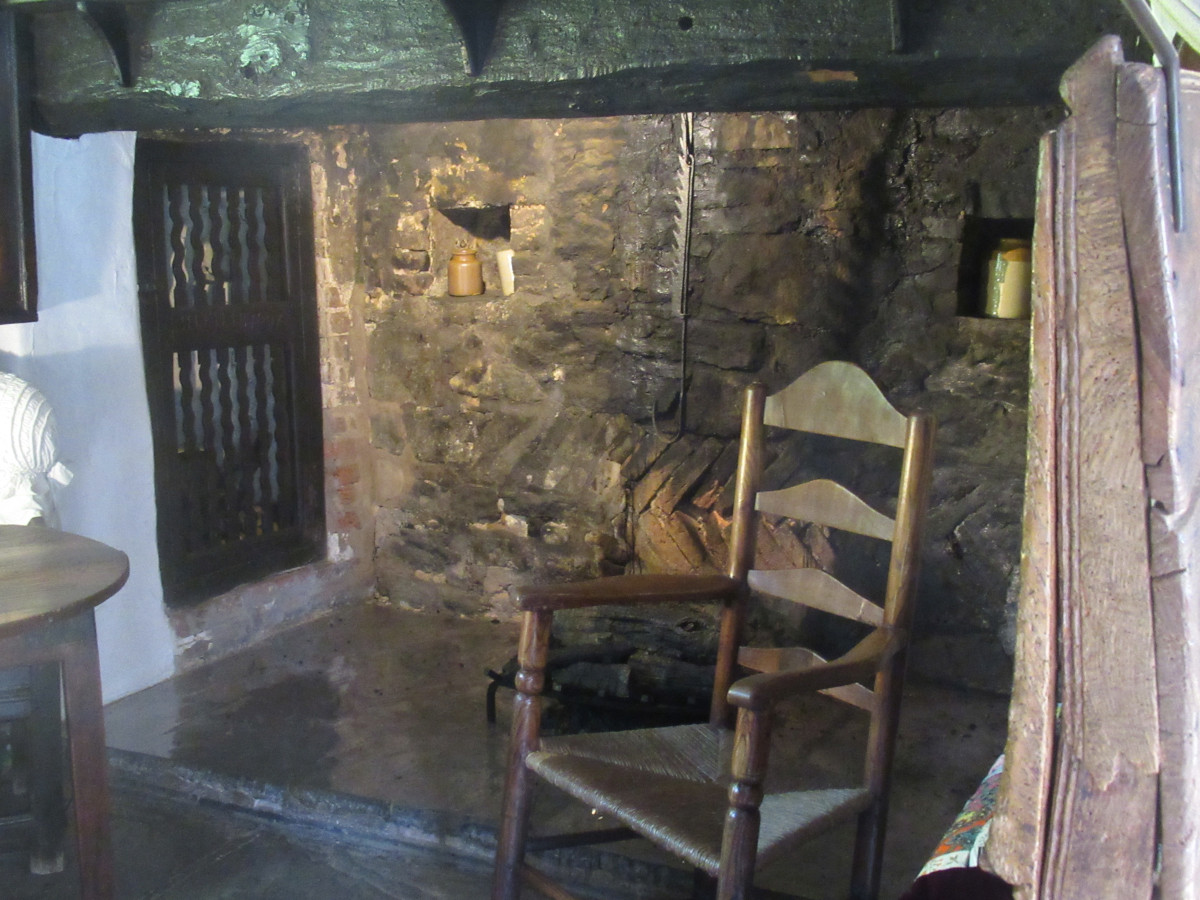
Shakespeare and Anne Hathaway were married under special licence in late November, 1582, when he was 18 and she some 8 years older. There’s a description of the wedding on the podcast. Anne was a yeoman’s daughter and this was her family home in the little village of Shottery on the outskirts of Stratford, the place where Shakespeare courted her. It’s a delightfully wonky thatched cottage, originally built of wattle and daub in the 1460s. Its beamed rooms are furnished as they would have been in the 16th century including, in fact, a piece of furniture known as Shakespeare’s Courting Chair. The house sits in idyllic cottage gardens where there’s a sculpture trail based on Shakespeare’s plays.
new place
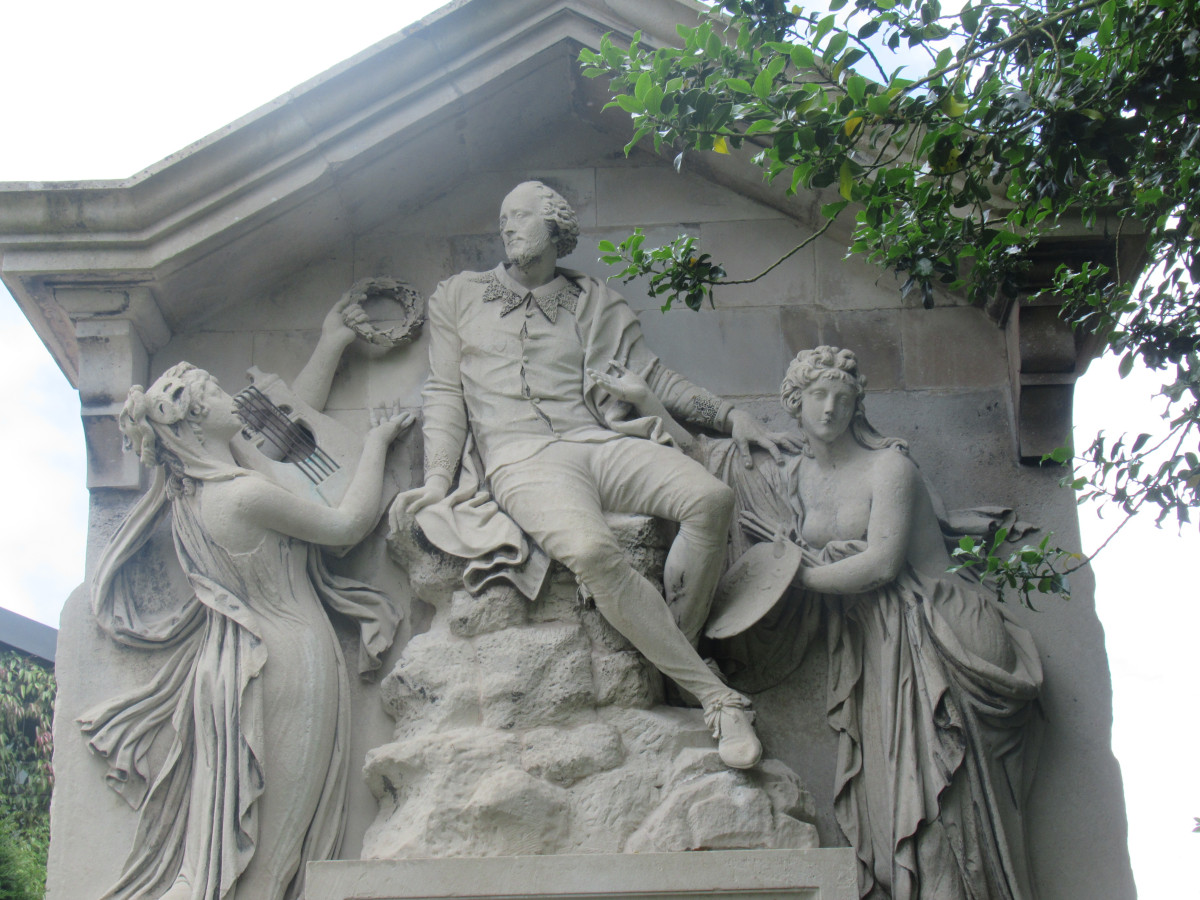
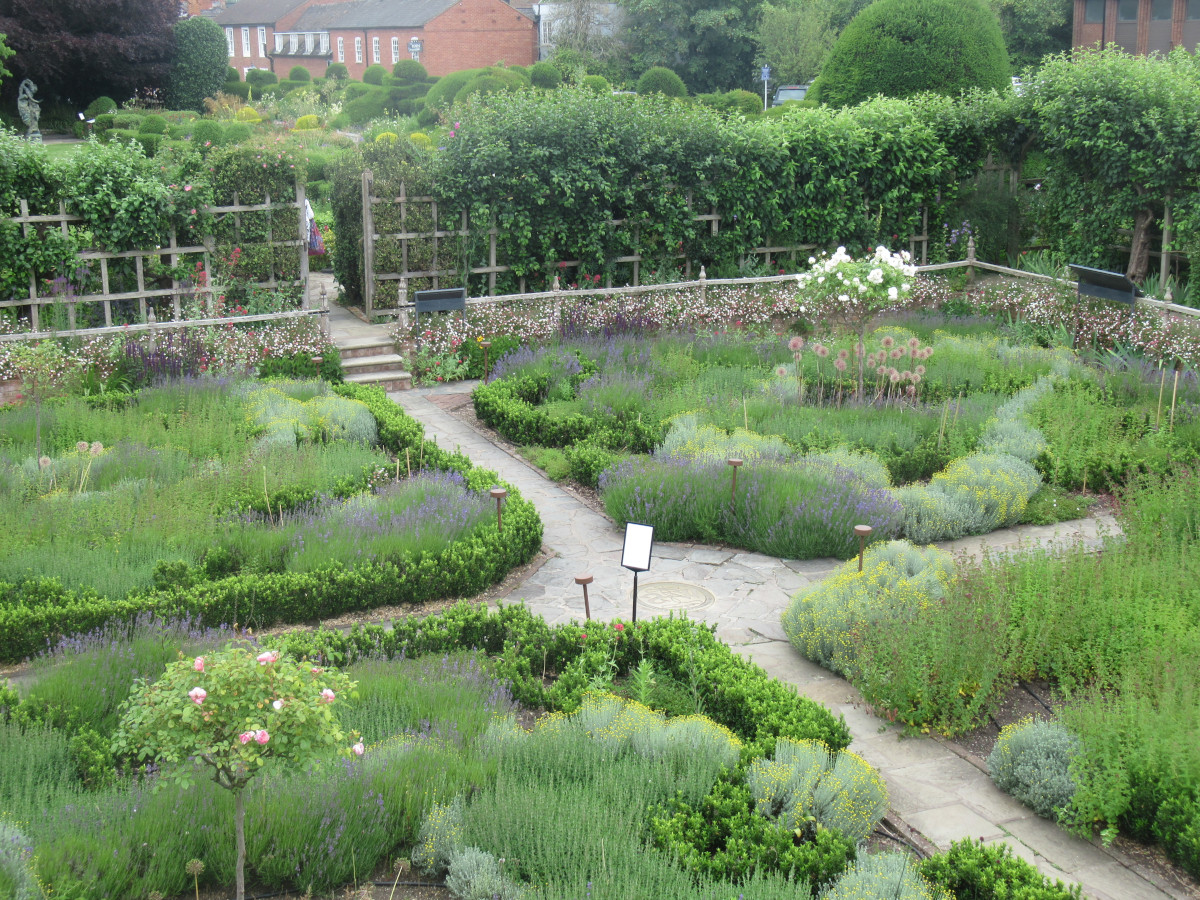
Shakespeare, now rich from his earnings in London, bought a grand property on this site in 1597. He owned it for 19 years, during which time he wrote about half of his plays and it’s thought that he perhaps used to return here to work on them, away from the noise and bustle of London. It was here that he died on April 23rd, 1616. The house was destroyed by a later owner in the 18th century and Nash’s House, next door, is a museum on the history of the site.
Today you can see the outline of the original property and visit the gardens which include an Elizabethan knot garden and, in the ‘Great Garden’, a mulberry tree said to have been planted from a cutting taken from a tree planted by Shakespeare himself. There’s also a range of sculptures and memorials, including a statue of Shakespeare with a quotation from Hamlet, describing his dead father, which seems very appropriate: ‘He was a man for all in all, I shall not look upon his like again’
holy trinity church
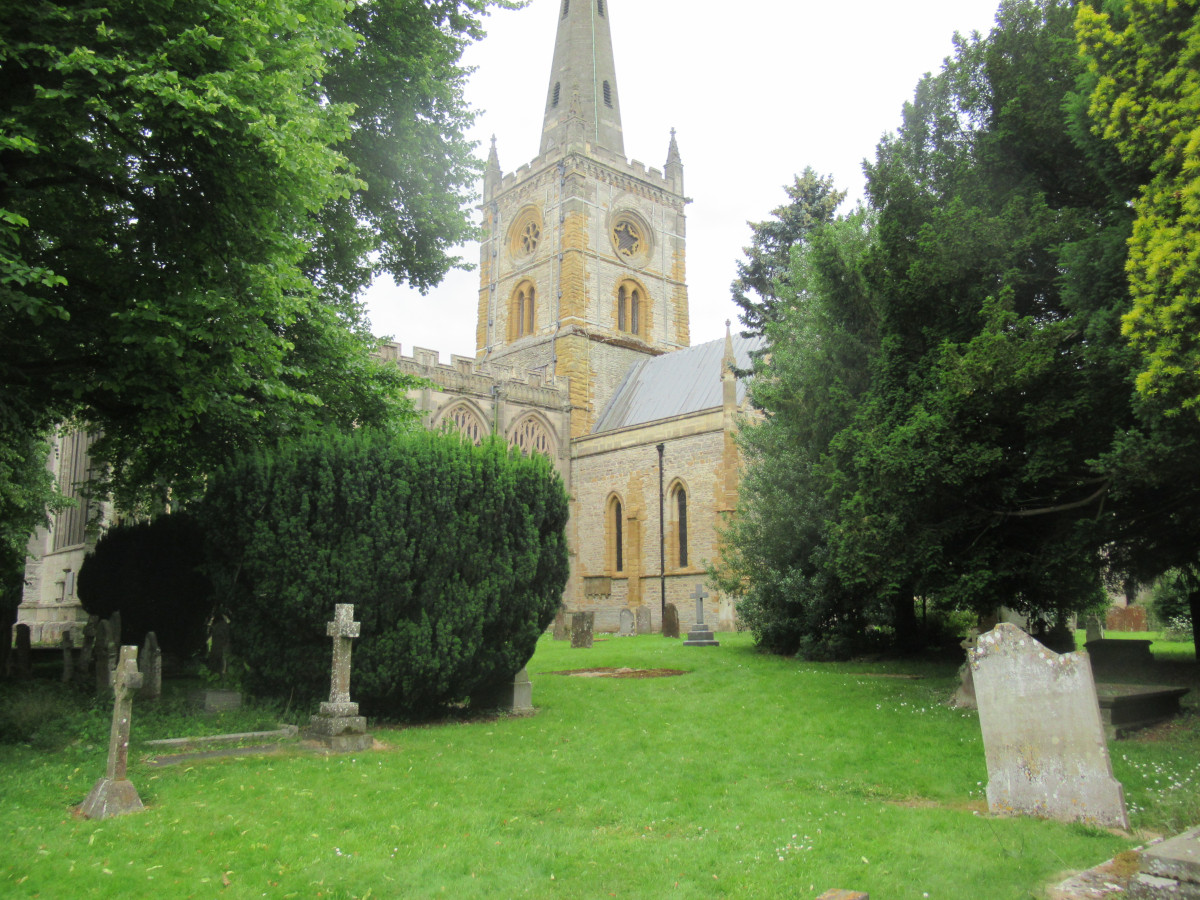
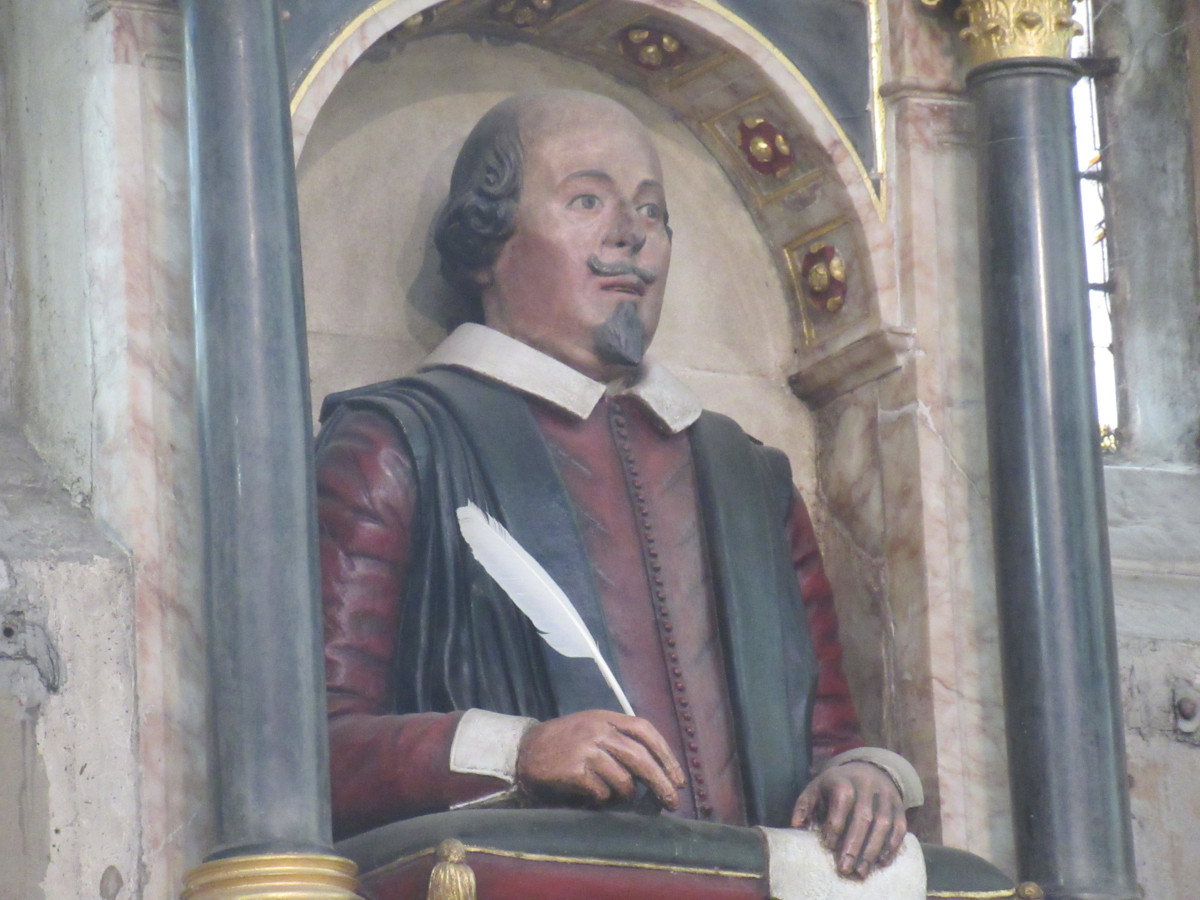
This is the oldest building in Stratford, most famous today for book-ending Shakespeare’s life, for he was both baptised and buried here. You can see a font and a bible which date from his time and you can visit his grave, just near the altar, with a sculpture of him above it. It was done by one of his contemporaries, so believed to be quite a good likeness. On his grave are words it’s thought he must have composed himself: Good Friend for Jesu’s sake forbeare / To dig the dust enclosed heare / Blest be the man that spares these stones / And curst be he who moves my bones
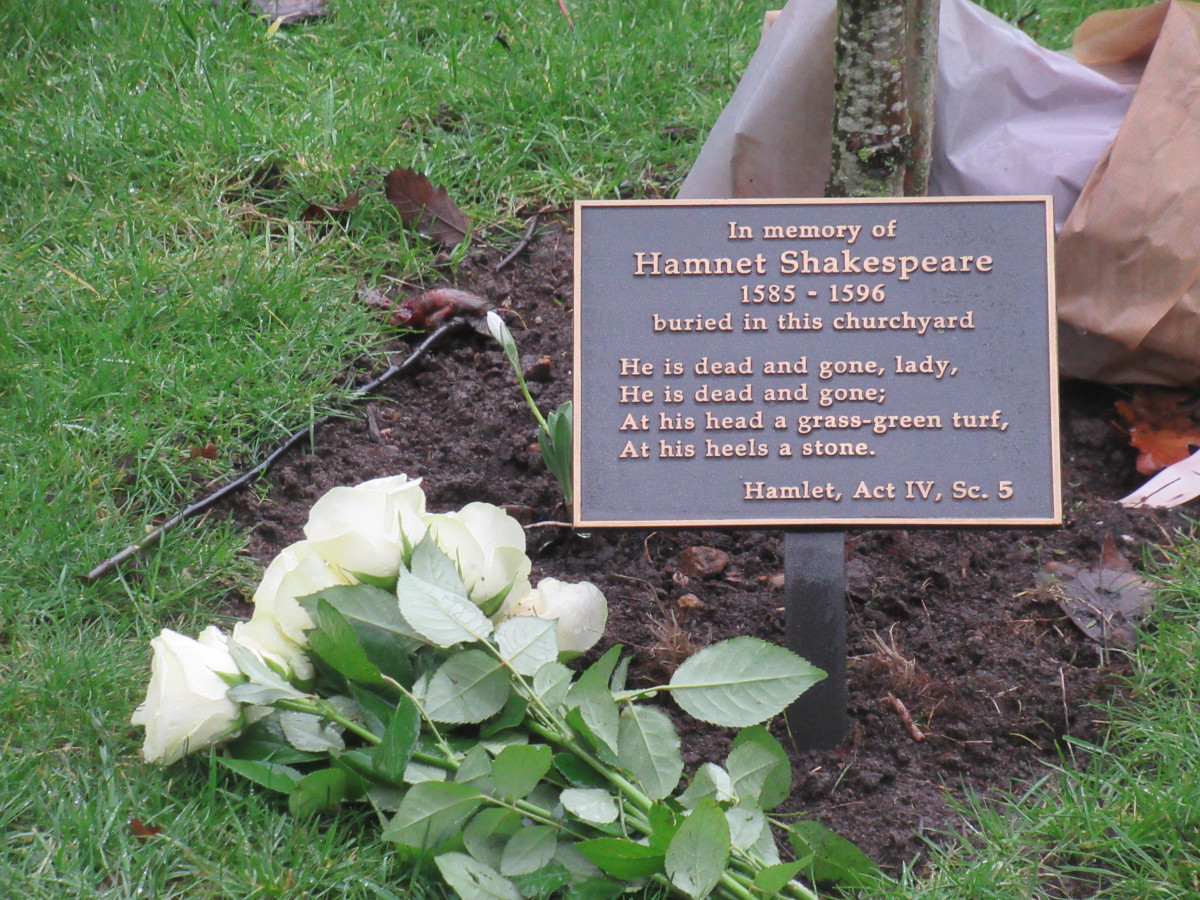
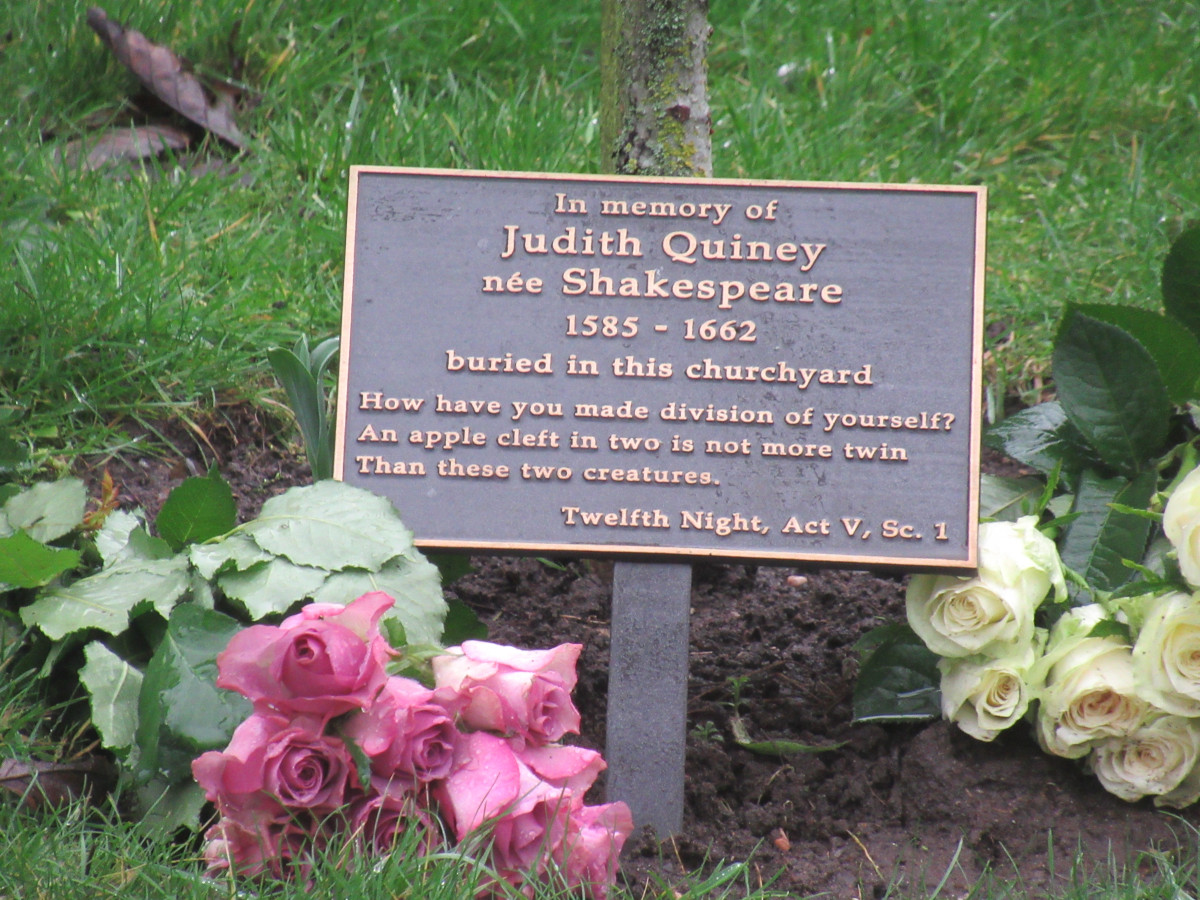
Shakespeare’s wife and daughter Susanna are buried nearby and his twins, Hamnet and Judith, are believed to have been buried in the churchyard, although it’s not known exactly where. Two rowan trees have been planted in their memory halfway up the path to the main church door and each has a plaque with their name, dates and an apt quotation from their father’s work.
Listen to the POdcast
Reading suggestions
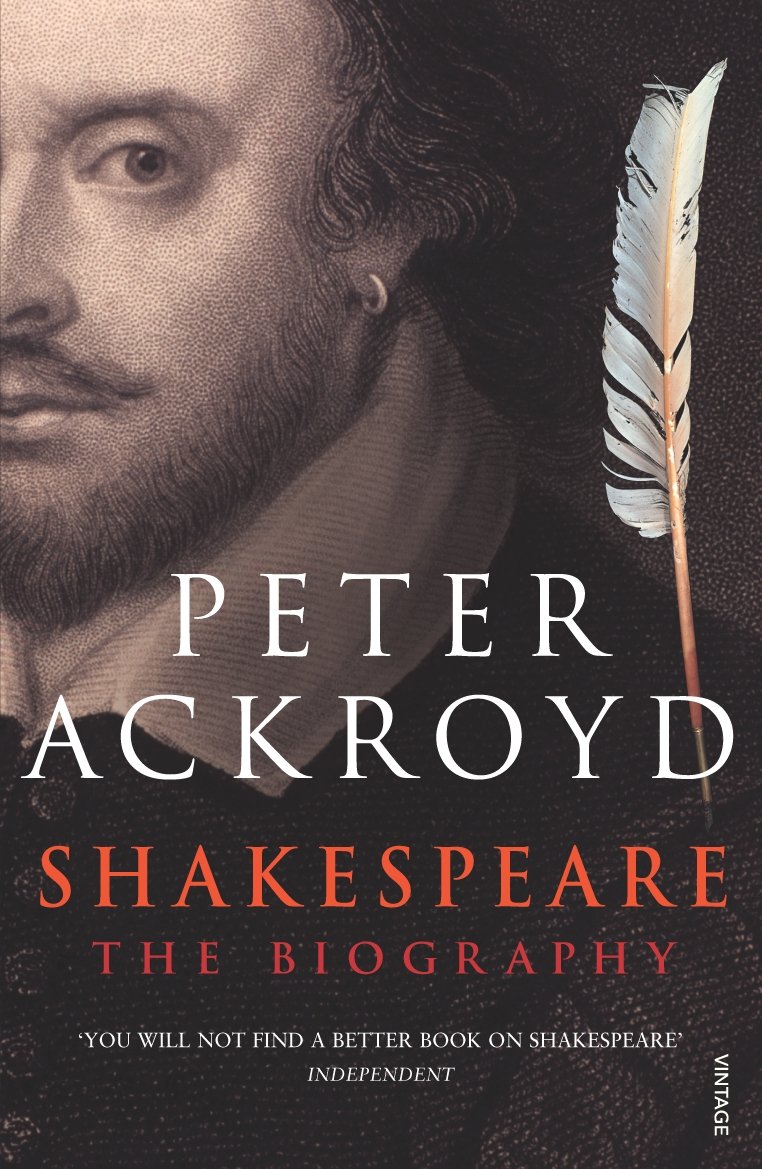
Shakespeare The Biography by Peter Ackroyd
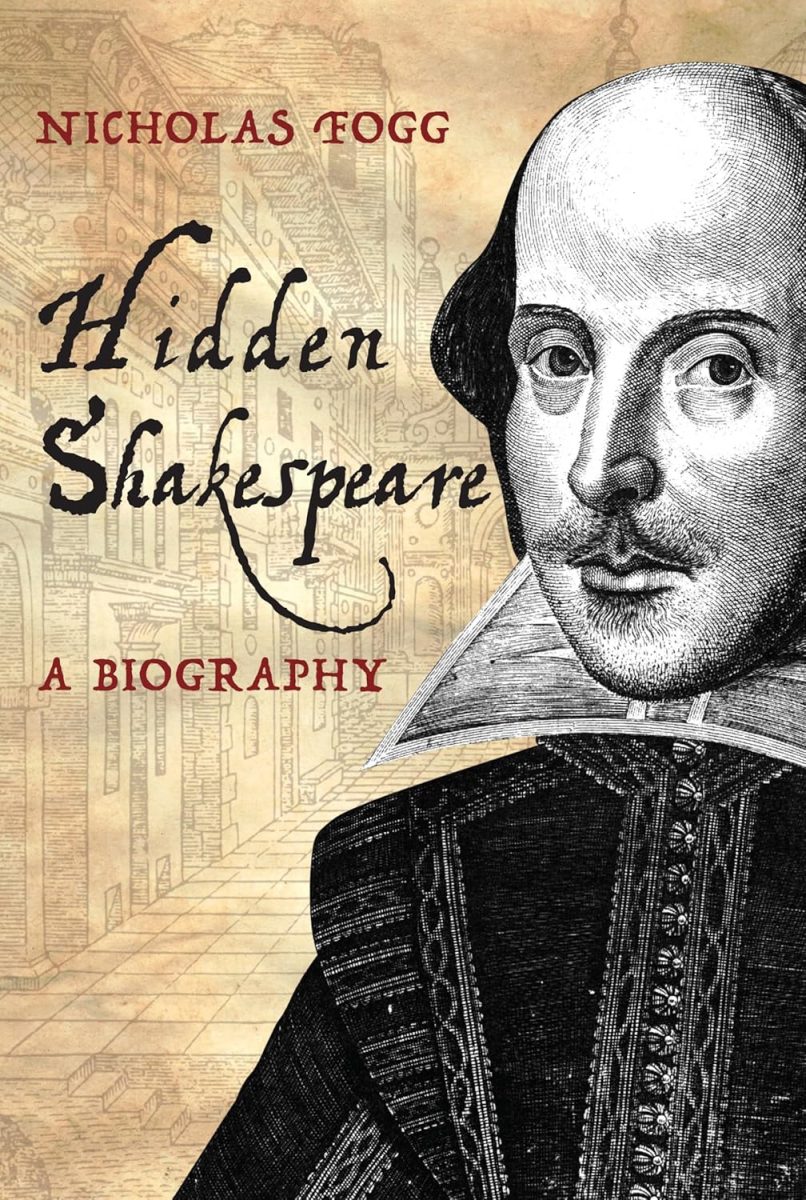
Hidden Shakespeare by Nicholas Fogg
Fools and Mortals by Bernard Cornwell
Shakespeare by Bill Bryson
Hamnet by Maggie O’Farrell
links for this post
Shakespeare’s Birthplace
Shakespeare’s Schoolroom and Guild Hall
Anne Hathaway’s Cottage
New Place
Holy Trinity Church
Previous episode Introduction to Stratford-Upon-Avon
Next episode coming soon
Last Updated on May 6, 2026 by Marian Jones